

Halesia tetraptera
- noun
- /heɪˈliːziə ˌtɛtrəˈpɛtərə/
- Specialized
- The Halesia tetraptera is often planted in gardens for its attractive spring blossoms.
Examples
-
Several mature Halesia tetraptera line the path in the arboretum, creating a beautiful canopy.
-
The Halesia tetraptera blooms beautifully in spring.
-
Botanists studied the fruit structure unique to Halesia tetraptera.
-
Have you seen a Halesia tetraptera tree before?
-
Several mature Halesia tetraptera line the path in the arboretum, creating a beautiful canopy.
-
The Halesia tetraptera is often planted in gardens for its attractive spring blossoms.
-
Botanists studied the fruit structure unique to Halesia tetraptera.
Synonyms

A medium-sized tree with white bell-shaped flowers in spring

A medium-sized tree with white, bell-shaped flowers that bloom in spring

A medium-sized tree that loses its leaves and has white bell-shaped flowers
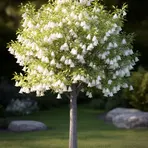
A North American tree with white bell-shaped flowers

A small tree or shrub with white bell-shaped flowers in spring
Surface Forms
Morphology
Halesia + tetraptera
This is a scientific binomial: knowing 'Halesia' tells a learner it is a kind of tree (so they can infer it names a species of Halesia), but the species epithet 'tetraptera' is a Latin/Greek descriptive term that most B1 learners will not recognize. Even if a learner knew the classical roots (tetra = four, ptera = wings) they would only get a morphological detail, not the full common description, so the meaning is only partially derivable from the parts.
Etymology
Halesia tetraptera gets its name from the part tetraptera, which means 'four' and 'wing' because the tree's fruit has four thin, wing-like ridges. That image of a seed with four little wings explains the name and helps you remember this small tree with white bell-shaped flowers.

