
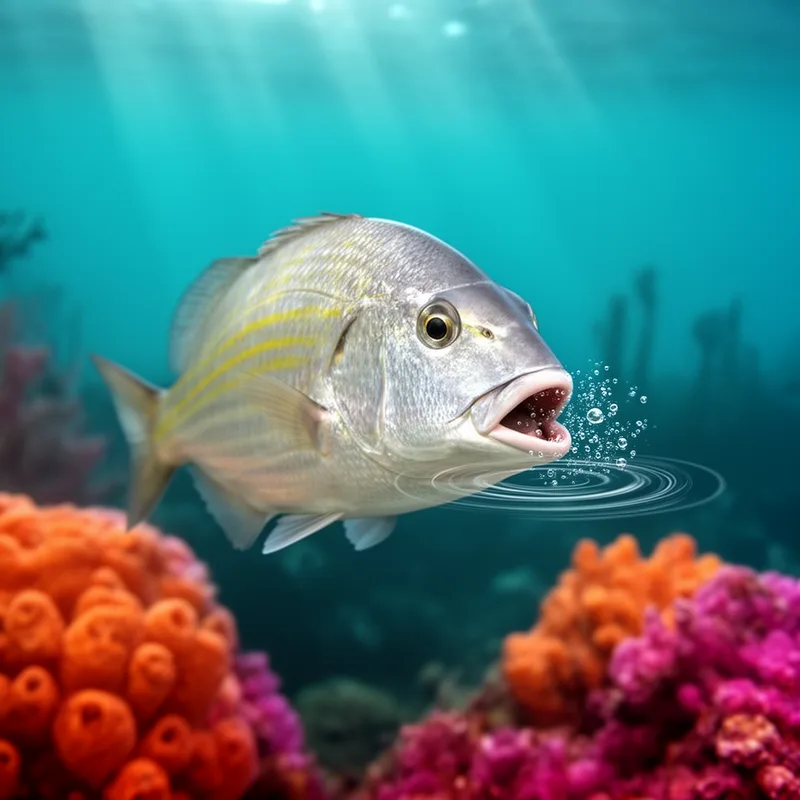
Haemulon macrostomum
- noun
- /ˈhiːməˌlɒn ˌmækroʊˈstɒməm/
- Specialized
- Scientists observed how the Haemulon macrostomum communicates through low-frequency sounds.
Examples
-
The Haemulon macrostomum is often found near coral reefs in the Caribbean.
-
Divers frequently spot Haemulon macrostomum while exploring coastal waters.
-
The Haemulon macrostomum is often found near coral reefs.
-
Many divers enjoy observing the Haemulon macrostomum in its natural habitat.
-
Many divers enjoy observing the Haemulon macrostomum, known for its distinctive grunting sounds, in its natural habitat.
-
Scientists observed how the Haemulon macrostomum communicates through low-frequency sounds while swimming in schools.
-
Divers frequently spot the Haemulon macrostomum near coral reefs while exploring the vibrant marine life.
Synonyms

A small tropical fish with yellow stripes that makes low sounds by grinding its throat teeth
Surface Forms
Morphology
Haemulon + macrostomum
This is a scientific Latin binomial (genus + species) rather than an ordinary compositional English phrase; knowing everyday English words would not let a B1 learner infer it refers to a particular grunt fish. The species epithet is technical (and here not even glossed) and understanding the term requires taxonomic or Latin/Greek-root knowledge beyond B1 vocabulary, so the meaning is not transparently derivable.
Etymology
Haemulon macrostomum comes from parts that mean 'big mouth': macro meaning 'big' and stoma meaning 'mouth'. These fish are a kind of 'grunt'. They make low 'grunting' sounds and often live near reefs, so the name helps you picture a wide-mouthed grunt fish.

