
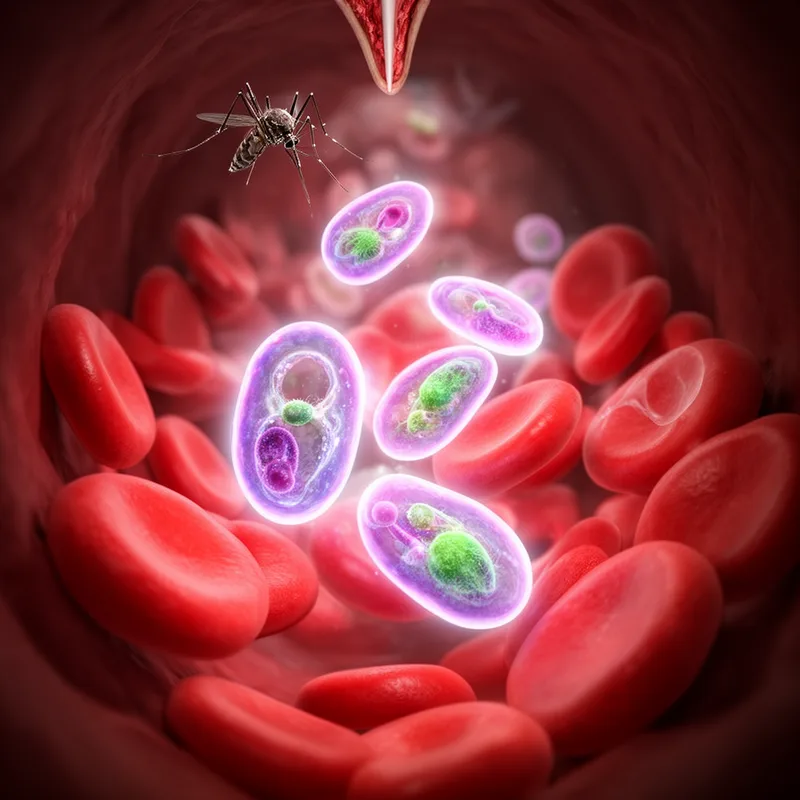
Haemosporidia
- noun
- /ˌhiːməˈspɔːrɪdiə/
- Specialized
- The Haemosporidia include the organisms responsible for malaria in humans and animals.
Examples
-
The Haemosporidia subclass includes various malaria-causing parasites.
-
Researchers discovered a new species of Haemosporidia in migratory birds.
-
Knowledge of Haemosporidia biology is essential for understanding the transmission of blood-borne protozoan diseases.
-
Researchers study Haemosporidia to understand their life cycle.
-
The Haemosporidia include the organisms responsible for malaria in humans and animals.
-
Researchers discovered a new species of Haemosporidia in migratory birds.
-
Knowledge of Haemosporidia biology is essential for understanding the transmission of blood-borne protozoan diseases.
Surface Forms
Morphology
Haemosporidia = haemo + sporidium
A Neo-Latin scientific compound formed from Greek combining forms ('haemo-' + 'sporidium'); these are specialised bound forms not productive standalone English words, so learners cannot reliably infer the meaning from components.
Etymology
Haemosporidia combines the parts haemo- meaning 'blood' and -sporidia meaning 'spores', like the English word spore. So Haemosporidia are 'blood spores', tiny parasites that live in the blood, which is why the name is used for the group that includes malaria parasites.

