
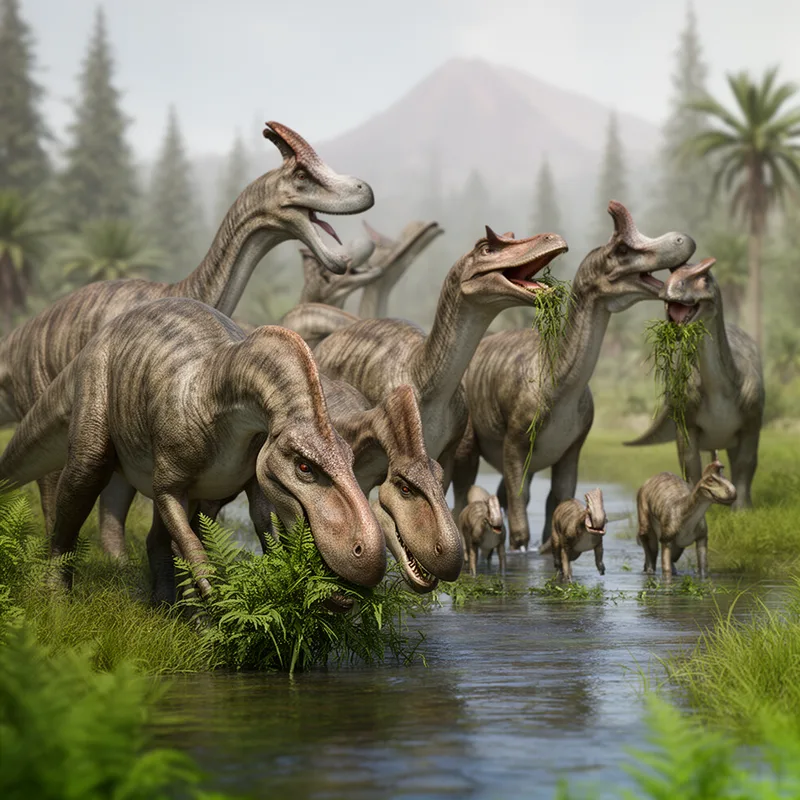
Hadrosauridae
- noun
- /ˌhædrəˈsɔːrɪdeɪ/
- Specialized
- Some members of Hadrosauridae had elaborate crests that may have been used for communication.
Examples
-
Scientists believe that Hadrosauridae traveled in herds and were among the most common herbivores of their time.
-
Fossils of Hadrosauridae have been discovered on several continents, shedding light on their wide distribution.
-
The Hadrosauridae family includes some of the most recognizable dinosaurs.
-
Did the Hadrosauridae really roam the Earth millions of years ago?
-
Fossils of Hadrosauridae have been discovered on several continents, shedding light on their wide distribution.
-
Scientists believe that Hadrosauridae traveled in herds and were among the most common herbivores of their time.
-
Some members of Hadrosauridae had elaborate crests that may have been used for communication.
Synonyms


 1
7.4
A large plant-eating dinosaur with a long, flat beak like a duck
Surface Forms
Morphology
Hadrosauridae = Hadrosaurus (opaque) = hadro + saur + idae
Formed by adding the technical taxonomic family suffix '-idae' to the Latinized genus name 'Hadrosaurus', a formation that is specialised and not semantically transparent to general learners.
Etymology
Hadrosauridae breaks into three parts: hadro- meaning 'thick' or 'heavy', saur meaning 'lizard' (the same saur you see in dinosaur), and -idae meaning 'family'. So, Hadrosauridae is like the 'thick-lizard family' — large, duck-billed, plant-eating dinosaurs that lived together in groups.