

Haber process
- noun
- /ˈheɪbər ˈprɑːsɛs/
- Specialized
- The Haber process is essential for producing fertilizers.
Examples
-
The invention of the Haber process had a major impact on food production and population growth.
-
Many chemical plants worldwide rely on the Haber process to produce ammonia efficiently.
-
The Haber process revolutionized agriculture by making large-scale fertilizer production possible.
-
Many farmers rely on the Haber process for ammonia.
-
The Haber process is essential for producing ammonia, which is a key ingredient in fertilizers.
-
Using the Haber process, industries can efficiently synthesize ammonia from nitrogen and hydrogen gas.
-
Many modern fertilizers are produced through the Haber process, highlighting its importance in agriculture.
Synonyms
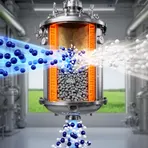
A process that makes ammonia by combining nitrogen and hydrogen gases at high temperature and pressure with an iron catalyst
Surface Forms
Morphology
Haber + process
The word 'process' clearly signals a method or sequence of steps, so a learner would infer this is some named procedure; however 'Haber' is an eponym (a proper name) that gives no semantic clue to ammonia synthesis. A B1 learner who only knows the constituent words would know it’s a specific process but would not be able to derive the precise meaning (producing ammonia), so the expression is partially but not fully transparent.
Etymology
Haber process is named after the chemist Fritz Haber, who found a way to make ammonia by making nitrogen from the air join with hydrogen using high heat, pressure, and a special material to speed the change. Because his method let factories make a lot of ammonia for fertilizer, the name now means 'a way to produce ammonia'.

