
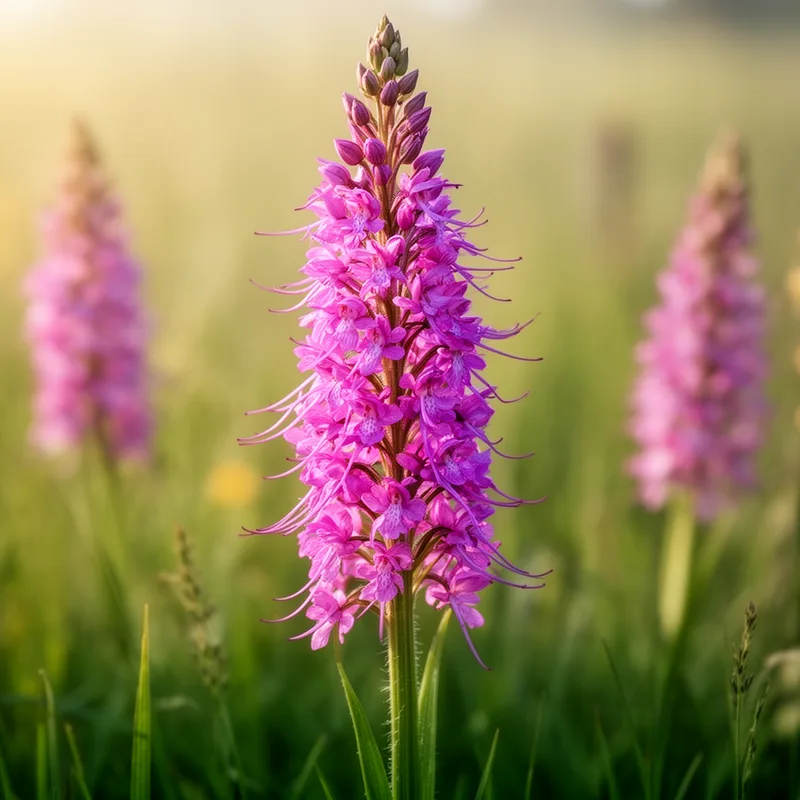
Gymnadenia conopsea
- noun
- Specialized
- The distinctive pink flowers of Gymnadenia conopsea make it a favorite among wild orchid enthusiasts.
Examples
-
The meadows were dotted with the delicate Gymnadenia conopsea, filling the air with a sweet fragrance.
-
Botanists were excited to find a thriving population of Gymnadenia conopsea in the protected nature reserve.
-
The Gymnadenia conopsea blooms beautifully in the summer.
-
Have you seen the Gymnadenia conopseas in the botanical garden?
-
The meadows were dotted with the delicate Gymnadenia conopsea, filling the air with a sweet fragrance.
-
The distinctive pink flowers of Gymnadenia conopsea make it a favorite among wild orchid enthusiasts.
-
Botanists were excited to find a thriving population of Gymnadenia conopsea in the protected nature reserve.
Synonyms

A type of orchid with many sweet-smelling pink, lilac, or red flowers on a tall stem
Surface Forms
Morphology
Gymnadenia + conopsea
This is a Latin binomial scientific name (genus + species) rather than an English compound whose meaning is built from familiar lexical items; the second element 'conopsea' is not an English word and provides no transparent descriptive cue to a B1 learner. Scientific names signal taxonomy rather than a compositional meaning (and are treated as proper nouns), so the sense 'a European orchid with fragrant spurred flowers' cannot be derived from the constituents by an average B1 learner.
Etymology
Gymnadenia conopsea may come from old Greek words: Gymnadenia meaning 'naked gland' and conopsea meaning 'gnat'. The name probably points to the orchid's open nectar gland and long flower spur that attract small insects, so the words help you remember what the flower looks like and why it was named.

