

Grevillea parallela
- noun
- Specialized
- The creamy blossoms of the Grevillea parallela attract native birds and insects throughout the dry season.
Examples
-
In northern Australia, the Grevillea parallela is known for its slender trunk and grey-green leaves.
-
The Grevillea parallela is often planted as an ornamental tree in Australian gardens.
-
Botanists studied the unique leaf structure of the Grevillea parallela during their field research.
-
The Grevillea parallela thrives in the warm climate of northern Australia.
-
Many gardeners appreciate the beauty of Grevillea parallela flowers.
-
The Grevillea parallela has beautiful cream-colored flowers that bloom in spring.
-
Many local residents enjoy planting the Grevillea parallela in their gardens due to its unique appearance.
Synonyms
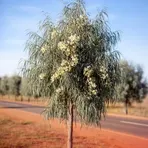
A small Australian tree with narrow grey-green hanging leaves and white or cream flowers
Surface Forms
Morphology
grevillea + parallela
This is a scientific binomial composed of a genus name plus a species epithet, so a learner who knows 'Grevillea' as a genus of flowering plants can reliably infer it refers to a type of Grevillea (i.e. a plant). However, the epithet 'parallela' is a Latin form not transparent to an average B1 learner and the detailed descriptive meaning (small slender tree with grey‑green pendulous leaves and specific flowers) cannot be derived from the parts alone, so the relation is only partially predictable.
Etymology
The plant name Grevillea parallela may come from two parts: Grevillea, named for a plant collector, and parallela, a Latin word meaning 'parallel'. The word parallela probably refers to the tree's long leaves with lines that run side by side, so the name helps describe this small, slender Australian tree.

