

Greco-Roman wrestling
 1
4.2
1
4.2

- noun
- /ˈɡrɛkoʊˈroʊmən ˈrɛslɪŋ/
- Specialized
- He has been training for years to compete in Greco-Roman wrestling at the Olympics.
- won Greco-Roman wrestling
Examples
-
The air is so cold and clear, and the sea so calm, and there, just there, if you shade the Arctic sunlight from your eyes, you can see a flat-topped chip off an old iceberg floating in an otherwise empty expanse of blue water, and on the ice, a moocow, a huge dog, and two naked white men engaged in Greco-Roman wrestling.
Fiction book (1999) -
-I am a master of Greco-Roman wrestling.
-
My Sport: Greco-Roman wrestling.
-
However, the games eventually took place on three days of the first week of January 1920, and included track-and-field competition, Greco-Roman wrestling, and tug-of-war.
Academic text (1994) -
In Greco-Roman wrestling, competitors cannot change their grip below the waist during a match.
-
The coach emphasized the importance of upper body strength in Greco-Roman wrestling techniques.
Synonyms
 270
1.4
270
1.4
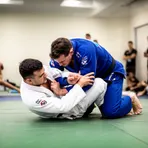
A sport where two people hold, push, or throw each other to make the other person's shoulders touch the ground
 1
4.8
1
4.8
Fighting where people hold and wrestle each other without hitting
How Restrictive
- Specialized
1
4.2
 9
4.1
9
4.1
Surface Forms
Morphology
The phrase literally combines 'Greco-Roman' (pertaining to Greek and Roman tradition) with 'wrestling', so a B1 learner who knows both words will infer it denotes a particular historical/style-based form of the sport. The precise technical rules (e.g. no holds below the waist) are specialized and not predictable from the words, but the general meaning as a distinct style of wrestling is transparently compositional.
Etymology
Greco-Roman wrestling gets its name from people who wanted to copy the way wrestlers look in old Greek and Roman pictures and statues, so they called the style Greco-Roman to suggest fighting with the arms and upper body only. That's why the sport means a form of wrestling where you may not hold below the waist and must use 'upper body' moves only.