
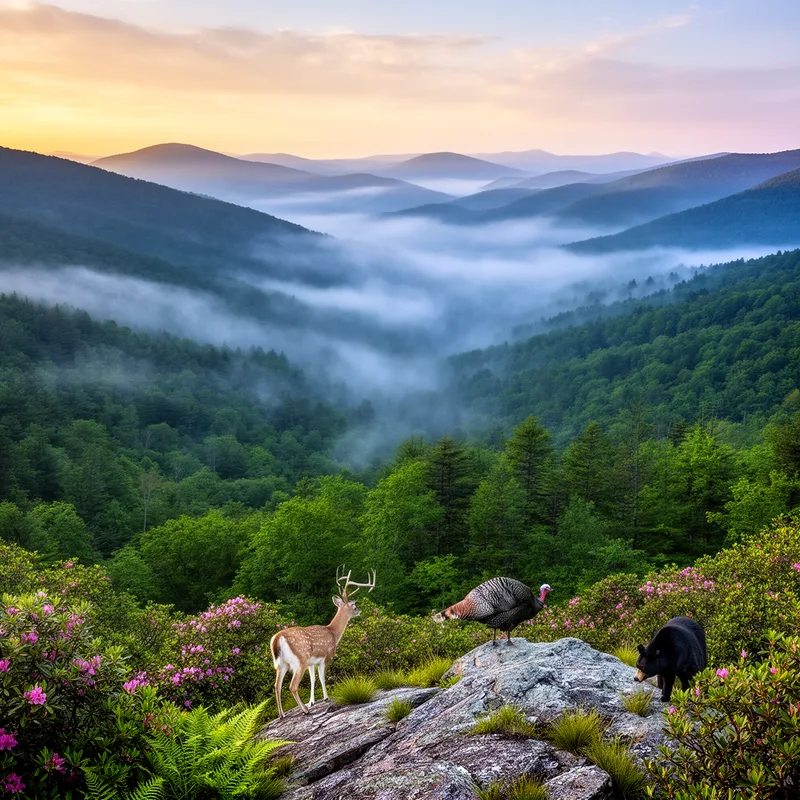
Great Smoky Mountains
 1
3.6
1
3.6

- proper noun
- /ɡreɪt ˈsmoʊki ˈmaʊntənz/
- Especially important were the tribe's location next to the Great Smoky Mountains National Park and the remarkable growth of tourism, which gave both Cherokees and many local whites a vested interest in maintaining an Indian identity.
- Great Smoky Mountains National Park
Examples
-
Amid the postwar prosperity, millions of Americans were buying new automobiles and taking to the highways, many to visit the Great Smoky Mountains National Park.
Academic text (1991) -
Bristol, nestled in the Great Smoky Mountains, lies on the Tennessee-Virginia border.
Fiction book (1994) -
We wish to enjoy the opportunities that our fine roads and the Great Smoky Mountain National Park have made possible for us.
Academic text (1991) -
Some of the most delicate and stressed units, such as the Everglades and Great Smoky Mountains parks, lack comprehensive studies.
Academic text (1994) -
The Great Smoky Mountains Railroad passes within a few hundred yards, and visitors to the site park their trucks in a run-down machine shed nearby.
Academic text (2002) -
When Tom Belt was growing up in Oklahoma, his Cherokee grandmother told him stories about a cool, green valley in the Great Smoky Mountains of western North Carolina, where their people had been born.
Academic text (2002) -
Hemmed in on all sides by the peaks of the Great Smoky Mountains, it's easy to imagine how the flat land around the river was prized as a refuge.
Academic text (2002) -
Hardship, population pressure, and treaties pushed the Cherokee farther and farther into the Great Smoky Mountains.
Academic text (2002) -
Our family spent a week hiking in the Great Smoky Mountains National Park, enjoying the stunning views and rich wildlife.
-
During our road trip, we made sure to stop at the Great Smoky Mountains National Park to experience its beautiful trails.
Synonyms
 3
6.0
3
6.0
A mountain range in the southeastern United States known for misty blue hills
A group of mountains on the border of North Carolina and Tennessee in the southeastern United States
Surface Forms
Morphology
The name's meaning ('a range of large, misty mountains') is directly and transparently built from 'great' (large), 'smoky' (misty/hazy), and 'mountains' (high landforms), so a B1 learner who knows the constituents can infer what it refers to. Although it denotes a specific geographic place (the proper name), that specificity does not obscure the basic descriptive meaning, and similar descriptive place names are cross-linguistically common.
Etymology
The name Great Smoky Mountains comes from the blue-gray mist that often covers the peaks and makes the smoky mountains look like they are wrapped in 'smoke'. Because early people saw this smoky look, the name stuck and now means the famous mountain range and park.