
Gomphotheriidae
- noun
- /ɡɒmfəˈθɪəriˌiːdə/
- Specialized
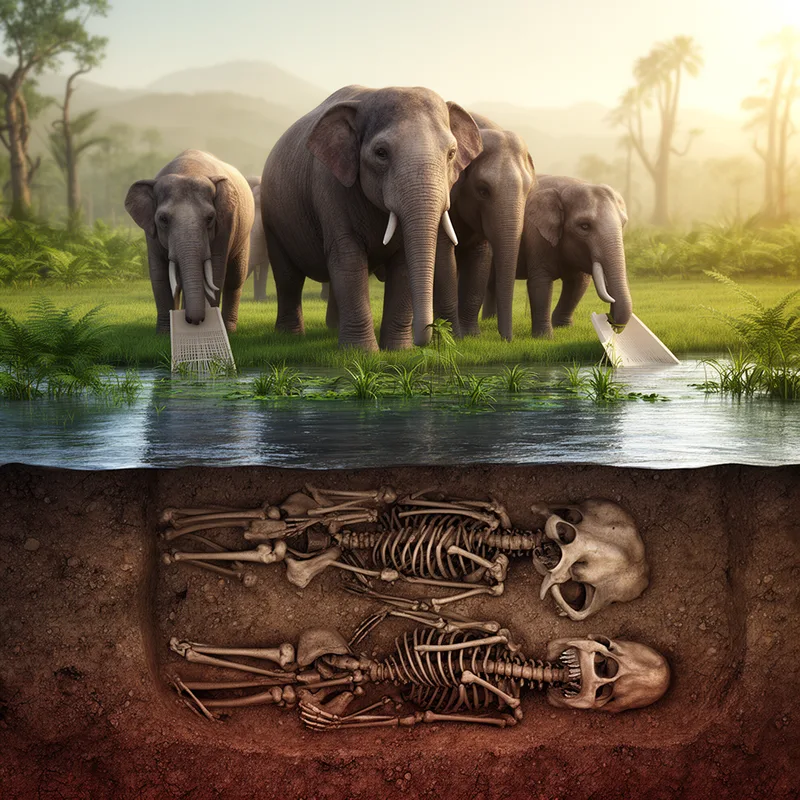
- The Gomphotheriidae possessed shovel-like lower jaws that distinguished them from modern elephants.
Examples
-
Researchers believe the extinction of Gomphotheriidae may be linked to changing climate and human activity.
-
Fossils of the Gomphotheriidae have been found on multiple continents, illustrating their widespread range.
-
The Gomphotheriidae family includes several species of ancient mammals.
-
Did you know that Gomphotheriidae lived during the Miocene epoch?
-
Fossils of the Gomphotheriidae have been found on multiple continents, illustrating their widespread range.
-
Researchers believe the extinction of Gomphotheriidae may be linked to changing climate and human activity.
-
The Gomphotheriidae possessed shovel-like lower jaws that distinguished them from modern elephants.
Synonyms


 1
9.9
A large extinct animal like an elephant that lived in Central and South America long ago
Surface Forms
Morphology
Gomphotheriidae = Gomphotherium (opaque) = Gomphotheri + idae
Formed by adding the specialized taxonomic family suffix '-idae' to a genus name; this is a technical morphological process not transparent to general learners.
Etymology
Gomphotheriidae comes from the Greek parts gomphos ('nail' or 'peg') and therion ('beast'), with -idae showing an animal family. The name gives a clear image of their nail-like, peg-shaped tusks, so Gomphotheriidae are the extinct elephant-like 'beasts' known for big tusks and shovel-like lower jaws.