
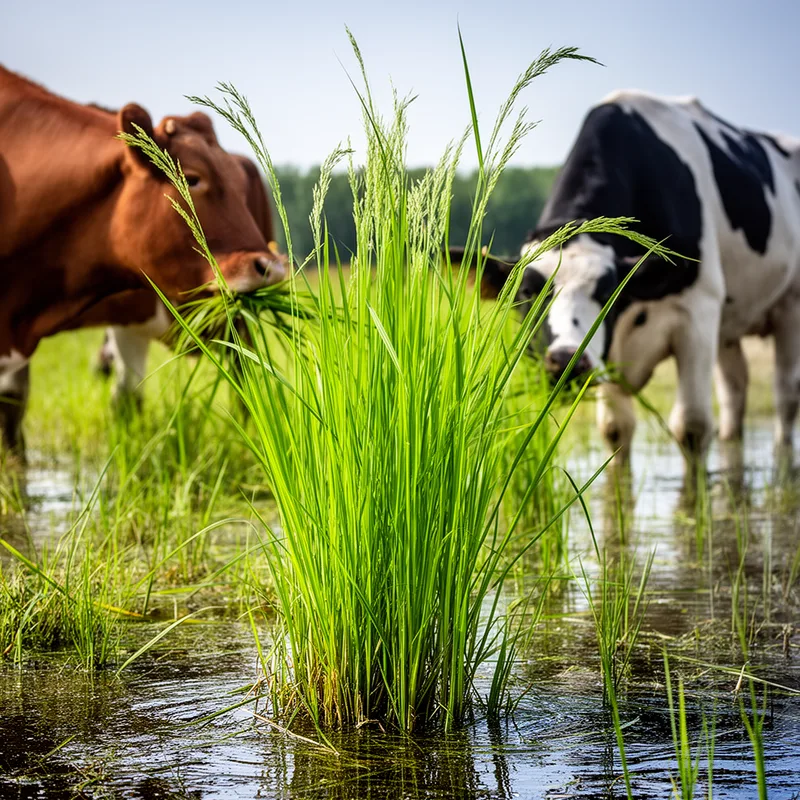
Glyceria grandis
- noun
- Specialized
- The wetland was filled with lush Glyceria grandis, providing pasture for grazing animals.
Examples
-
Farmers often plant Glyceria grandis to improve the quality of their livestock pastures.
-
Farmers often plant Glyceria grandis for its nutritious value.
-
Botanists surveyed the area and identified Glyceria grandis among other native grasses.
-
The Glyceria grandis thrives in wetland areas.
-
In the summer, the fields were abundant with Glyceria grandis, which provided excellent grazing for the cattle.
-
The biologist noted that Glyceria grandis is a valuable species in maintaining the health of moist ecosystems.
-
Many local farmers prefer Glyceria grandis as a pasture grass due to its adaptability to wet soils.
Synonyms

A type of grass that grows in wet places

A grass that grows in wet places with a sweet smell or taste
Surface Forms
Morphology
Glyceria + grandis
This is a Latin binomial combining the genus name 'Glyceria' (a type of grass) with the epithet 'grandis' (Latin for 'large'), so the sense is partly compositional — a large/tall Glyceria. However, understanding this requires knowledge of taxonomic naming conventions or Latin roots, which are not typical for an average B1 learner, making the relation only partially predictable.
Etymology
Glyceria grandis may come from a Greek word and a Latin word: the part Glyceria links to 'glykys' meaning 'sweet' and grandis means 'large' or 'tall'. The name creates a clear picture — a tall, sweet grass used in pastures — so that's why it fits this American mannagrass.

