
Globigerinidae
- noun
- /ˌɡloʊbɪˈdʒɪrɪnɪˌdeɪ/
- Specialized
- The fossilized shells of Globigerinidae contribute to the formation of deep-sea sediments.
Examples
-
Planktonic foraminifera like Globigerinidae are important indicators in paleoclimatic studies.
-
Scientists classified several new species under the family Globigerinidae.
-
The Globigerinidae are fascinating organisms.
-
Did you know that Globigerinidae are important indicators of past ocean conditions?
-
Planktonic foraminifera like Globigerinidae are important indicators in paleoclimatic studies.
-
The fossilized shells of Globigerinidae contribute to the formation of deep-sea sediments.
-
Scientists classified several new species under the family Globigerinidae.
Surface Forms
Morphology
Globigerinidae = Globigerina (opaque) = Globigerin + idae
This is a specialist taxonomic family name formed from the genus name with the scientific suffix '-idae', so its meaning is not derivable by general English learners.
Etymology
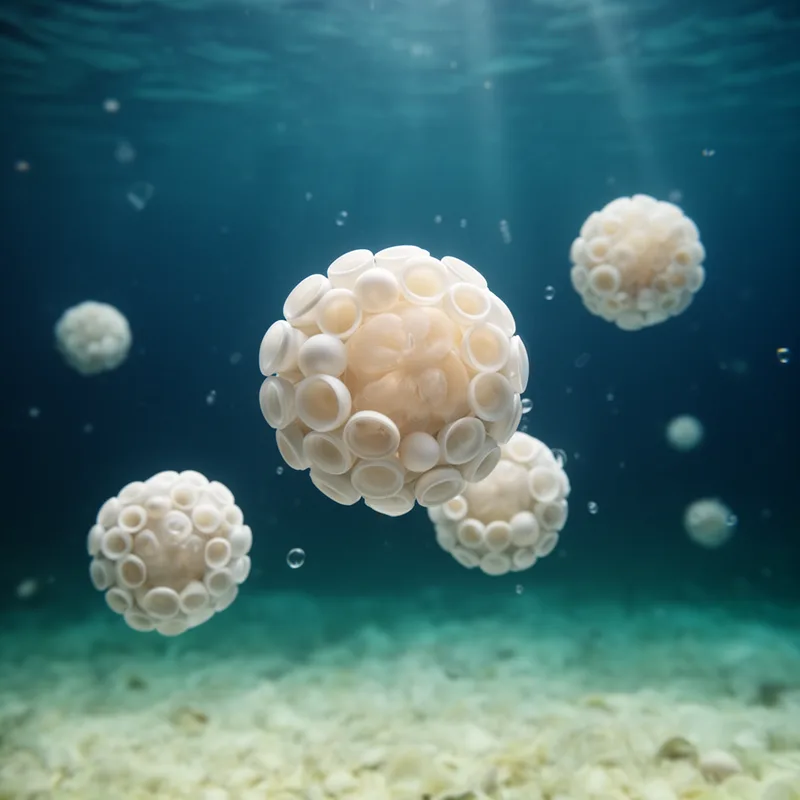
Globigerinidae comes from parts that mean 'globe' and 'to carry': glob- is the same idea as the English word globe, -gerin- comes from a root meaning 'to carry', and -idae shows it is a 'family' in biology. So the name is like 'globe-carriers' and helps you remember these tiny sea creatures that float as plankton and have round, chambered shells.

