
Gestalt principle of organization
- noun
- /ɡəˈʃtɑlt ˈprɪnsəpəl əv ˌɔrɡənɪˈzeɪʃən/
- Specialized
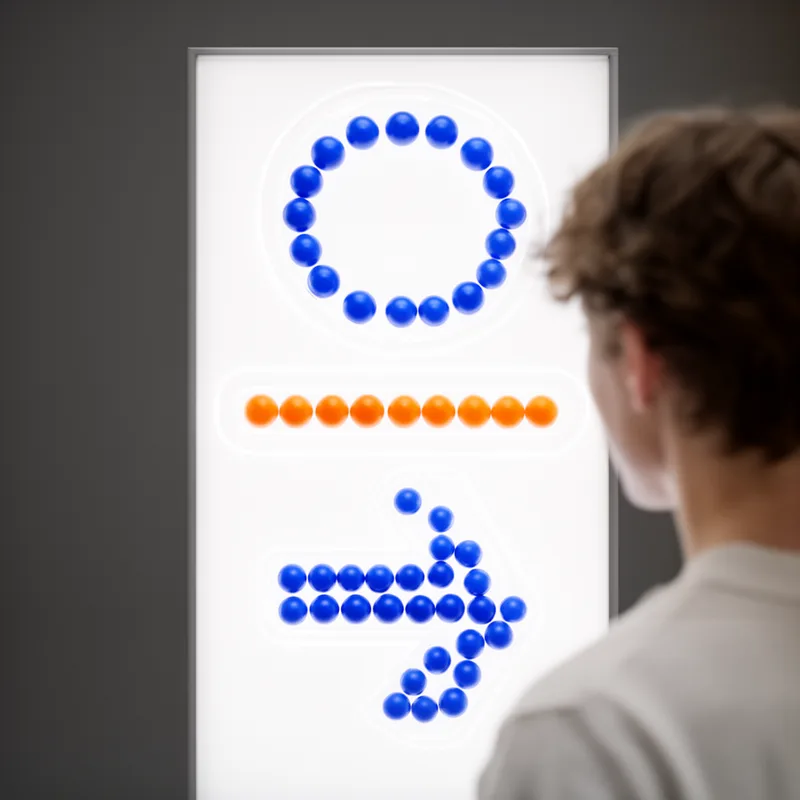
- The Gestalt principle of organization helps explain why we perceive a series of dots as a single line.
Examples
-
Understanding the Gestalt principle of organization can improve how information is presented in educational materials.
-
The Gestalt principle of organization helps us understand visual perception.
-
Designers often use the Gestalt principles of organization to create visually appealing layouts.
-
Can you explain the Gestalt principles of organization in detail?
-
Designers often use the Gestalt principles of organization to create visually appealing layouts.
-
The Gestalt principle of organization helps explain why we perceive a series of dots as a single line.
-
Understanding the Gestalt principle of organization can improve how information is presented in educational materials.
Synonyms

A rule that explains how people see separate parts as one whole
Surface Forms
Morphology
gestalt + principle + of + organization
The phrase is a compositional noun phrase: 'gestalt' (a unified whole in perception) + 'principle' (a rule) + 'of organization' (about arranging items) directly yields the meaning 'a rule about how perceptual elements are organized into wholes.' Although it is technical, the semantic relation is transparent and follows standard noun phrase composition, so a learner who knows the constituent words can infer the overall meaning.
Etymology
Gestalt principle of organization comes from the German word Gestalt, meaning 'shape' or 'whole', and organization, meaning how parts are put together. It gives a simple picture: our mind prefers whole forms, so it naturally groups similar or close items into a single pattern, and that's why the principle explains how we see unified shapes in design.

