
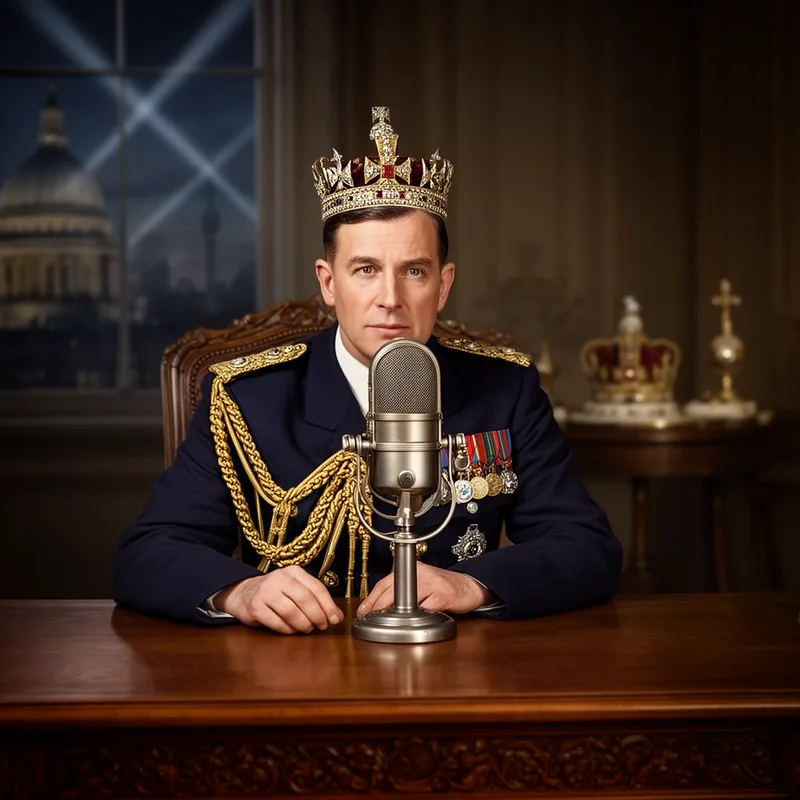
George VI
 3
4.8

- proper noun
- George VI was crowned king in 1936 after the abdication of his brother, Edward VIII.
Examples
-
The film depicted the challenges faced by George VI during World War II.
-
Many coins and stamps from the era bear the image of George VI.
-
George VI delivered a famous radio broadcast to rally the British people in 1939.
-
King George VI was a significant figure during World War II.
-
Did George VI really succeed Edward VIII?
-
Many people remember George VI for his efforts to support the British public during World War II.
-
As king, George VI played a crucial role in the events leading up to the independence of India in 1947.
Surface Forms
Morphology
George + VI
The constituent 'VI' transparently signals the ordinal 'the sixth', so a learner who knows the words will infer this is 'George the Sixth' (the sixth person named George). However, the specific referent being a monarch and the historical details (King of the UK 1936–1952) are not derivable from the name components alone and require world knowledge, so the expression is only partially predictable.
Etymology
George VI was born Albert but took the name George VI when he became king after his brother gave up the throne, so imagine a man stepping into his brother's shoes at a hard time. That's why George VI refers to the British 'king' who led the country through World War II and after.