
Gehenna
 1
9.9
1
9.9

- noun
- /ɡəˈhɛnə/
- Literature
- The overwhelming majority of rabbinic thought maintains that people are not in Gehenna forever; the longest that one can be there is said to be 12 months; however, there has been the occasional noted exception.
Loading YouTube…
Watch on YouTubeAnd if you call your brother a fool, then you're subject to Gehenna.
- And if you call your brother a fool, then you're subject to Gehenna.
Examples
-
"And do not fear those who kill the body, but are not able to kill the soul; rather fear Him who is able to destroy both soul and body in Gehenna. They said to Him, 'He will miserably destroy those evil men and will lease the vineyard to other vinedressers, who will give the fruit to him in their seasons.'"
Blog text (20) -
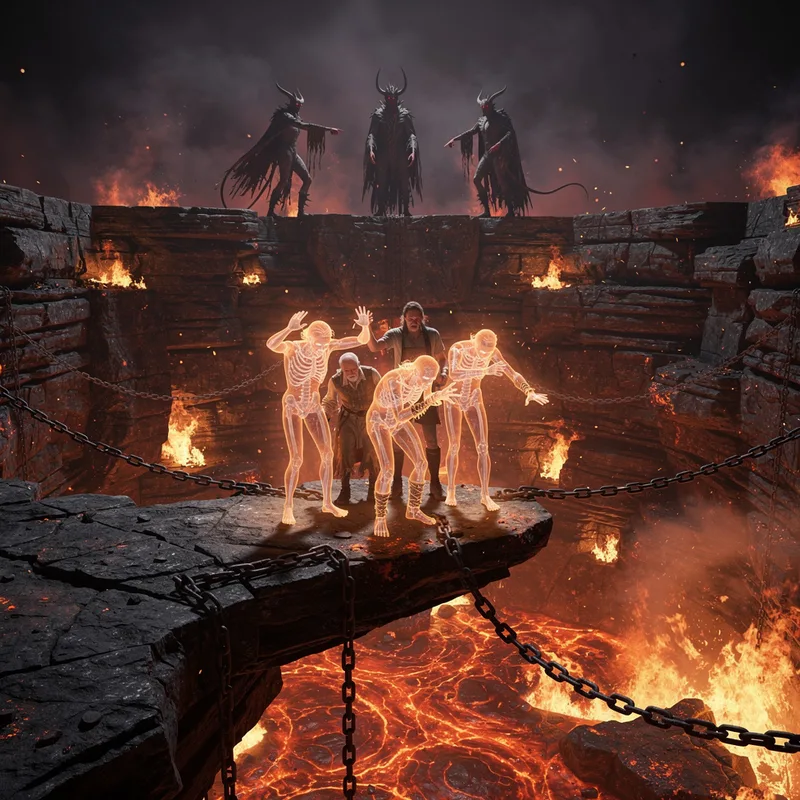
In many religious teachings, Gehenna represents a place where the wicked are punished after death.
-
The days of wrath are coming, my friend, where the wicked shall burn in the fires of Gehenna.
-
Gehenna, the Valley of Hinnom, is the potter's field of Jerusalem.
Blog text (18) -
If there are some texts in which he speaks of Gehenna as a definitive state, there are many others that seem to view it as a purifying chastisement.
Academic text (1993) -
The preacher warned his congregation about the eternal suffering that awaits sinners in Gehenna.
-
According to some interpretations of scripture, Gehenna is a metaphor for a state of torment for those who do not repent.
Synonyms
 581
2.1
581
2.1
A place after death where the dead are punished in some religions
 38
9.4
38
9.4
Being punished forever after death for sins
 14
9.9
14
9.9
A deep, dark place under the earth where very bad souls are punished forever after death
 12
9.4
12
9.4
Punishment that never ends in Hell for doing something wrong
Surface Forms
Etymology
The word Gehenna comes from the name of a real place, the Valley of Hinnom, near Jerusalem. Because that valley was linked with cruel rites and burning, people came to use Gehenna as a picture of 'hell' or a place of punishment after death.