
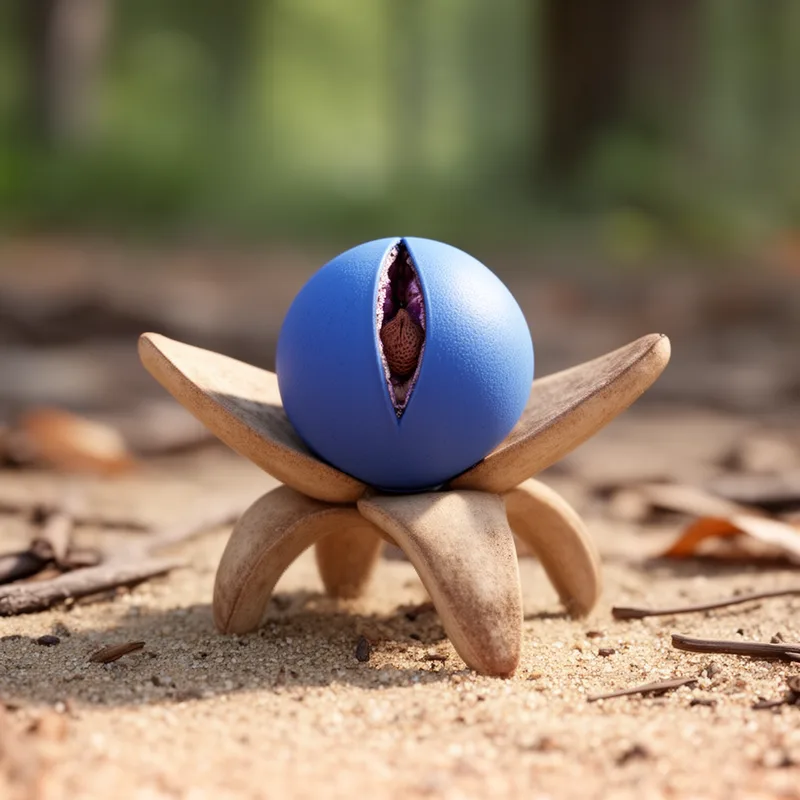
Geastrum coronatum
- noun
- Specialized
- The distinctive rays of Geastrum coronatum make it easy to identify among other earthstars.
Examples
-
Photographers are drawn to the unusual beauty of Geastrum coronatum in its mature, star-like form.
-
Botanists observed that Geastrum coronatum prefers growing in sandy woodland soils.
-
Look at that Geastrum coronatum!
-
I found a Geastrum coronatum in the forest yesterday.
-
Botanists noted that Geastrum coronatum thrives in sandy woodland soils where it can receive ample sunlight.
-
The unique shape of Geastrum coronatum with its bent rays makes it a fascinating subject for nature photographers.
-
During a hike, I spotted a Geastrum coronatum nestled among the fallen leaves of the forest floor.
Surface Forms
Morphology
Geastrum + coronatum
This is a Latin binomial: Geastrum (a star-like/earthstar fungus) plus the epithet coronatum (Latin for 'crowned'), so a learner who knows both parts could infer a 'crowned' earthstar — i.e., an earthstar with a crown-like or raised spore sac. However, as a technical taxonomic name the precise morphological details (bluish spore sac, purplish gleba, rays bending back) are specialist and not fully predictable from the parts, so the transparency is partial.
Etymology
Geastrum coronatum comes from two old words: Geastrum, from 'earth' and 'star', and coronatum, from 'crowned'. The fungus opens into rays like a star and those rays bend back to lift the spore sac like a small crown, so the name helps you remember its star shape and 'crowned' top.

