
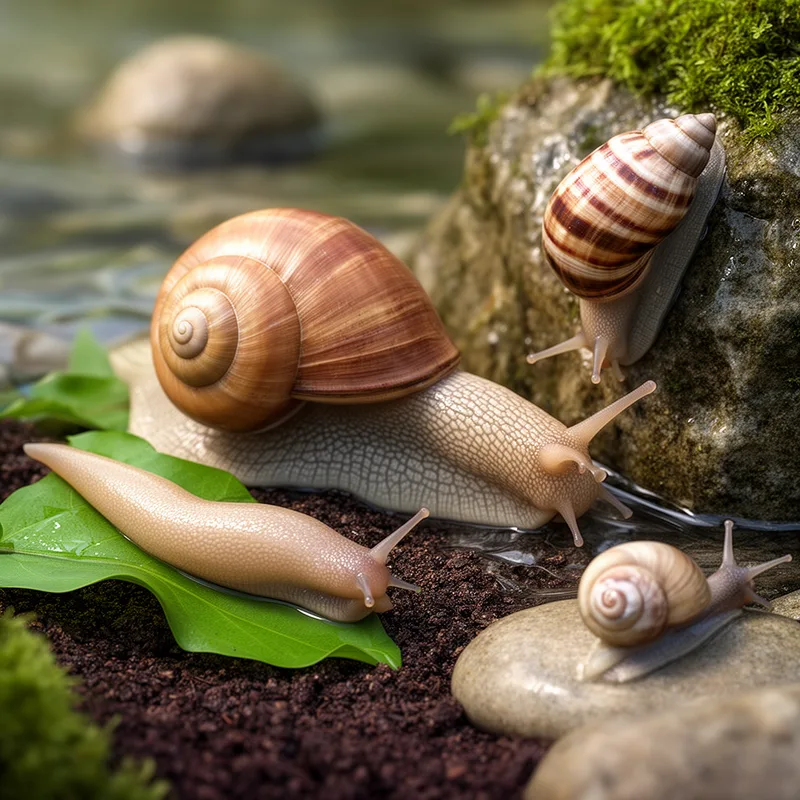
Gastropoda


 1
8.7
- proper noun
- /ˌɡæstrəˈpoʊdə/
- Specialized
- Many species within the class Gastropoda, such as snails and slugs, play essential roles in their ecosystems.
Examples
-
The shell of most Gastropoda species is spirally coiled.
-
Biologists study Gastropoda to understand the evolution of mollusks.
-
Many marine creatures in the class Gastropoda are vital to aquatic ecosystems.
-
Look at that Gastropoda!
-
The Gastropoda class includes many fascinating species.
-
Biologists study Gastropoda to understand their diverse adaptations in different environments.
-
The fascinating class of Gastropoda is known for its unique physical features, including a muscular foot.
Synonyms

A group of animals like snails and slugs that usually move on a foot and often have a coiled shell
Surface Forms
Morphology
Gastropoda = gastropod (semi-transparent) = gastro + pod + a
The base 'gastropod' is a recognizable scientific term built from Greek combining forms, but the final '-a' is a Latin/taxonomic ending that does not add an obvious everyday meaning.
Etymology
Gastropoda joins Greek parts gastro- and -poda, which mean 'stomach' and 'foot', creating the image 'stomach-foot'. That image explains the group: animals like snails and slugs use a big, strong foot under their belly to move, so the name points directly to how they live.