

Gargantua


 1
9.9
1
9.9
- proper noun
- /ɡɑrˈɡæn.tʃu.ə/
- Literature
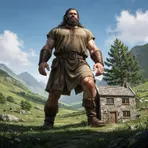
- In François Rabelais' novel, Gargantua is depicted as a giant with an insatiable appetite for food and knowledge.
- Gargantua and Pantagruel
Examples
-
Indeed, later editions of the Metamorphosis actually incorporate the Rabelaisian character, Gargantua, and feature him as the one who plows the grass of Ajax and angers the Greek hero.
Academic text (1997) -
-- Rabelais, Gargantua and Pantagruel
Fiction book (1992) -
To conclude, we can say that these episodes from Don Quijote and Gargantua put into question the notion of priority, the notion that deeds precede words, that "experiencia" is prior to "sentencia" or "ciencia," and that the future can be predicted on the basis of the past.
Academic text (1998) -
The character of Gargantua in Rabelais' work is known for his exaggerated size and humorous adventures.
-
Readers are often entertained by the antics of Gargantua, a giant who embodies both wisdom and gluttony.
Synonyms
 153
2.3
153
2.3
A very large imaginary person in stories
 2
7.4
2
7.4
A very large and powerful person or company that beats others easily

A very large or powerful thing that causes great damage like the movie monster

A funny name for a very large, rough-looking person or thing
Surface Forms
Etymology
Gargantua comes from the giant in a book by the French writer François Rabelais, a character famous for his huge size and appetite. So Gargantua and the related word gargantuan now mean 'very large' or 'huge', especially about size or eating.