
Galilean
 1
8.2
1
8.2

- adjective
- /ˌɡælɪˈliːən/
- The pair determined their longitude by observing three eclipses of Jupiter's Galilean moons—the preferred method of the period for finding longitude on land.
Examples
-
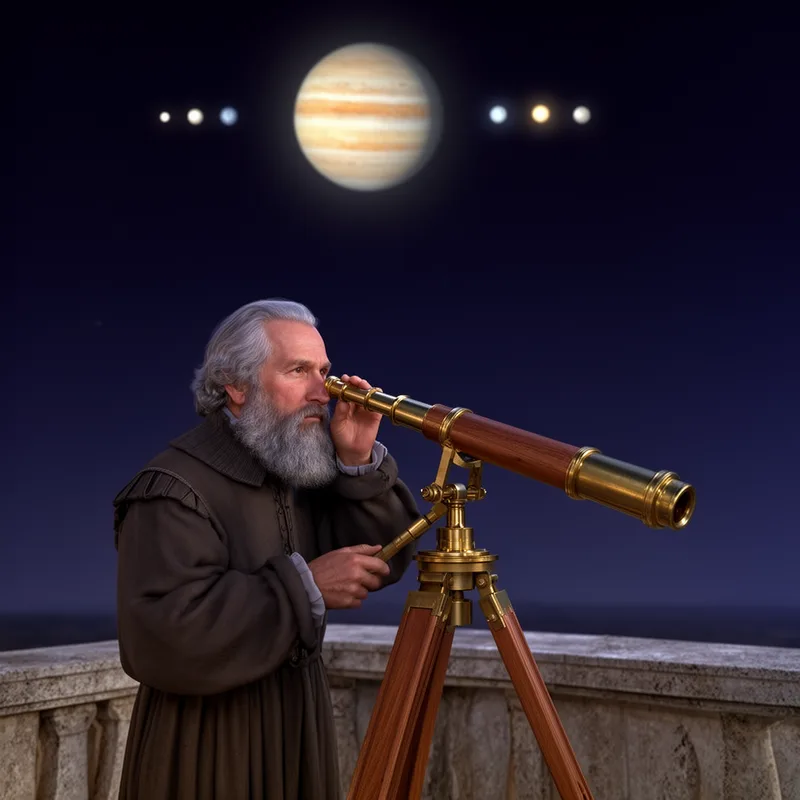
The four largest moons of Jupiter are known as the Galilean satellites, named after their discoverer, Galileo Galilei.
-
Using a telescope, astronomers can observe the Galilean moons as they orbit around the planet Jupiter.
-
Once during each orbit of Jupiter, the Galilean satellites pass in front of or behind the planet.
Academic text (2002) -
These are the famed Galilean moons.
Academic text (2005) -
These are called the Galilean moons because they were discovered by Galileo in 1610.
Academic text (1996) -
For a period lasting over a century, the most effective way to determine longitude was to observe the Galilean moons of Jupiter.
Academic text (2002) -
Many scientific debates about planetary motion were influenced by Galilean theories of observation and measurement.
Compounds


- Archaic
An early telescope invented by Galileo that uses two lenses to make upright images
Surface Forms
Morphology
Etymology
Galilean comes from the name Galileo and means 'of or like Galileo'. So it is used for his ideas, his telescope, or discoveries that relate to him.