

Gaia
 5
8.0
5
8.0

- proper noun
- /ˈɡaɪə/
- Specialized
 :
Gaia
:
Gaia
- But, until recently, the Gaia hypothesis was virtually ignored by most of the scientific community.
- Gaia hypothesis
- Gaia theory
- Gaia framework
The Earth or Gaia is a is a holistic living Organism.
- The Earth or Gaia is a is a holistic living Organism.
Examples
-
The Earth or Gaia is a is a holistic living Organism.
-
The Gaia theory has not been proven.
-
Clearly, the scientific debate over Gaia is in full bloom.
Academic text (1991) -
Thus, they argue, Gaia is actively maintaining a fairly constant climate temperature as the sun heats up.
Academic text (1991) -
Lovelock's Gaia hypothesis suggests that the Earth in its totality functions as a single, self-regulating organism.
Academic text (1993) -
Many environmentalists believe that protecting flora and fauna is essential for preserving Gaia, the living Earth.
-
The concept of Gaia emphasizes that all ecosystems are interconnected and function as a single, self-regulating organism.
-
By studying Gaia, scientists aim to understand how all life on Earth contributes to its resilience and balance.
Synonyms

 1
6.5
1
6.5
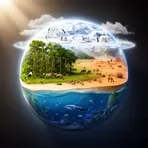
All living things on Earth and the natural places where they live considered as one system
Surface Forms
Etymology
Gaia is used today to describe the Earth and its ecosystems as one living whole, and the name comes from the Greek goddess of the 'earth'. So when people talk about Gaia, they mean the planet and its living parts working together like a single living system.