
Gaeltacht


 1
9.9
- proper noun
- /ˈɡeɪlˌtɑːxt/
- Irish
- The last time I ventured to the pub was about three months ago with my then-boyfriend in the Donegal Gaeltacht, where the most outrageous thing anyone did was speak English.
Examples
-
A Gaeltacht in itself, an image of the landscape of language we had been trying to encounter in Kerry.
Fiction book (1997) -
Although there were many attempts by men of letters during this period to offset linguistic stereotyping, both the language and the Gaeltacht continued to experience negative prestige.
Academic text (2001) -
Even the harsh banning of all remnants of the Scottish Gaeltacht following Culloden allowed for the continuous growth of Scottish nationalism.
Academic text (2006) -
During this period, a rise in the "Gaeltacht," or region which claimed Gaelic as its traditional language, and increasing Royalist sentiment established the roots for the later Jacobite movement.
Academic text (2006) -
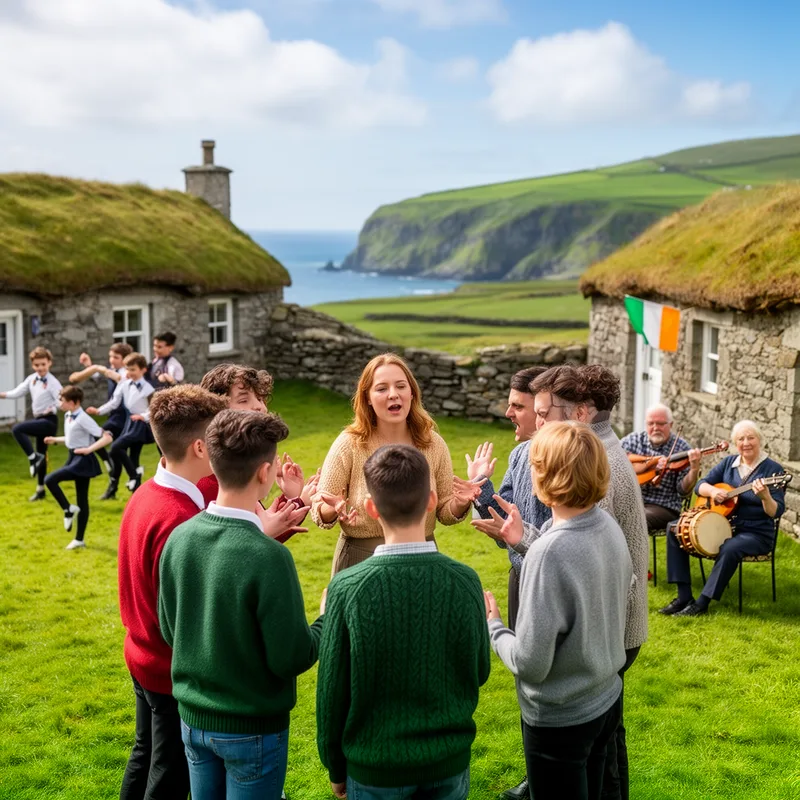
The Gaeltacht is known for its vibrant Irish language festivals that attract visitors from around the world.
-
During our visit to the Gaeltacht, we immersed ourselves in the local culture and practiced our Irish with the residents.
-
In the Gaeltacht regions of Ireland, traditional music and dance are celebrated as essential parts of the community's heritage.
Surface Forms
Etymology
Gaeltacht comes from Irish roots: Gael (people who speak Irish, and the source of 'Gaelic') and -tacht meaning 'place' or 'state', like the English ending in 'neighborhood'. So a Gaeltacht is an area where Irish is the main language and the culture is kept.