
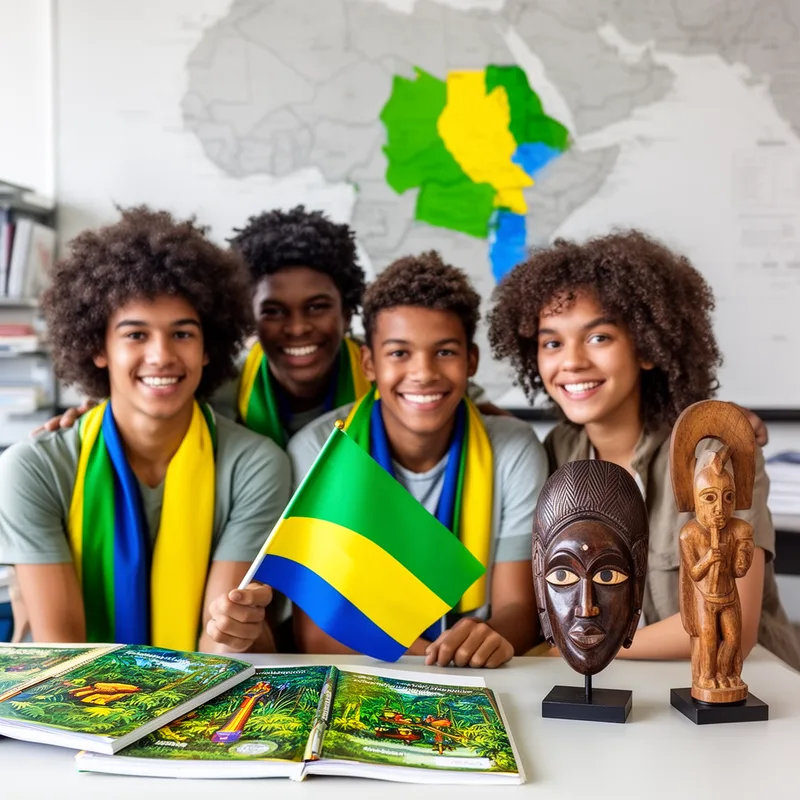
Gabonese


 1
6.0
1
6.0
- adjective
- /ˌɡæbəˈniːz/
 :
gabonés
:
gabonés
- The nineteenth-twentieth century European responses to the bieri reliquary sculptures contributed to the development of Gabonese law as it stands today.
- Gabonese citizens
- Gabonese citizenship
- Gabonese elites
Examples
-
The connections between Gabonese political elites and French culture are intimate and of considerable historical depth.
Academic text (1998) -
As often happens, events may be running ahead of the special Franco-Gabonese relationship.
Academic text (1998) -
Thus, the person of Bongo and the image of the state were now merged in the minds of many Gabonese citizens.
Academic text (1998) -
At independence in 1960, Gabonese citizenship, as both identity and entitlement, was significant only for a very small portion of the population.
Academic text (1998) -
Though there was an economic price to pay for these actions, the Gabonese state was able to avert more serious political unrest through an exercise in "citizenship promotion."
Academic text (1998) -
Nguema's final remark is revealing and speaks volumes about the nature of the French influence in Gabon and about Gabonese ideals of citizenship.
Academic text (1998) -
After independence, Gabonese lawmakers included these infractions into Penal Code Law no. 21/63 of May 31, 1963, thereby adopting the French worries.
Academic text (2010) -
The Gabonese people celebrated their independence with a grand festival.
-
Many Gabonese students are studying abroad to gain international experience.
-
The Gabonese government is working to protect its rainforests for future generations.
Compounds

Surface Forms
Morphology
Etymology
Gabonese comes from Gabon plus the ending -ese, which means 'from' or 'of' and you can see the same ending in Chinese and Portuguese. So Gabonese describes something that is 'from Gabon' or about its people.