
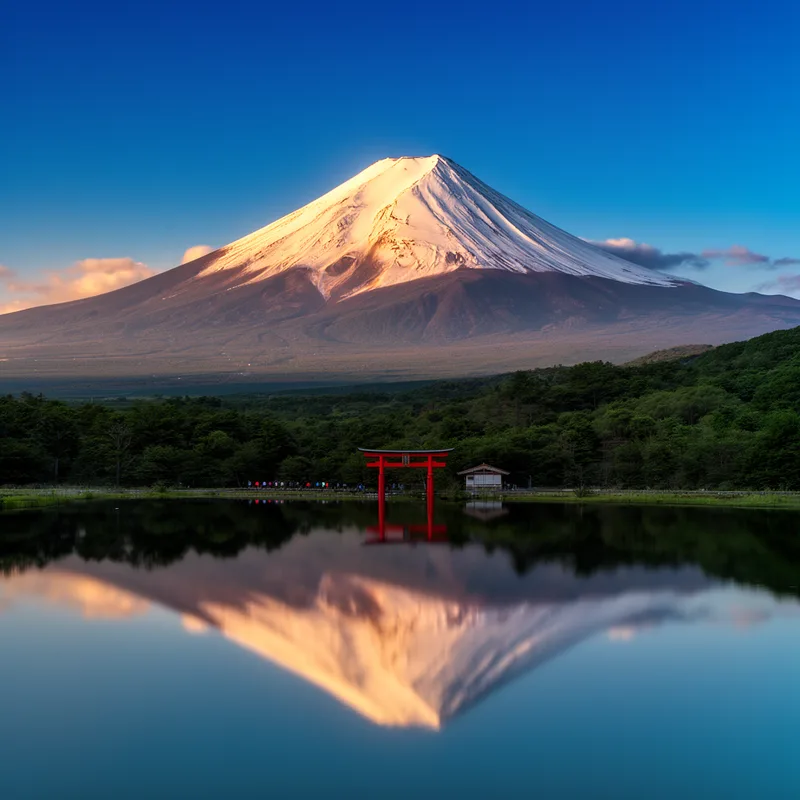
Fuji-san
- proper noun
- Many tourists dream of climbing Fuji-san to watch the sunrise from its summit.
Examples
-
Photographers around the world are captivated by the perfect shape of Fuji-san.
-
For centuries, Fuji-san has been considered a sacred site in Japanese culture.
-
Many tourists visit Fuji-san every year.
-
Have you ever climbed Fuji-san?
-
For centuries, Fuji-san has been considered a sacred site in Japanese culture.
-
Many tourists dream of climbing Fuji-san to watch the sunrise from its summit.
-
Photographers around the world are captivated by the perfect shape of Fuji-san.
Synonyms
 16
4.9
16
4.9

A tall, snow-capped volcano in Japan and the country's highest mountain that climbers and pilgrims visit
 1
7.4
1
7.4
A tall mountain in Japan with a snow covered peak that is the country's highest and considered sacred

A sleeping volcano in central Honshu, Japan, that is the country's highest peak
Surface Forms
Etymology
Fuji-san names Japan's famous mountain, and the ending -san here is the Japanese word for 'mountain', not the polite 'Mr'. The origin of Fuji is unclear, but a helpful way to remember it is that people often write it with characters like 不二 ('not two') or 不死 ('not death'), which show why the mountain is thought of as unique and sacred.