

Freudianism


 1
8.4
1
8.4
- noun
- /ˈfrɔɪdiənˌɪzəm/
- Specialized
- The influence of Freudianism can be seen in various fields, including literature, art, and psychology.
- Freudianism and Marxism
Examples
-
Marxism and Freudianism, for example, prospered for generations before being effectively contested.
Academic text (1997) -
And if you were a young postwar parent about to give birth to a baby boomer, Freudianism had something for you too.
Academic text (1996) -
According to Freudianism, if you say you hate your father, you hate your father; if you say you love your father, you also hate your father.
Academic text (1993) -
The second legacy from the early days of Freudianism was the freedom to be egoistic.
Academic text (1996) -
But the most powerful disseminating force during the years before and after the Great War was the cadre of writer-intellectuals who became patient advocates of psychoanalysis and Freudianism.
Academic text (1996) -
She then made the point that American Studies has tended to ignore Freudianism and that feminists, such as Kate Millett, have been hostile to its assumptions.
Academic text (1995) -
Unheedful of tradition, convention, loyalty to family, and parental wishes, Freudianism circa 1950 told the young that the only thing that counted was being true to oneself.
Academic text (1996) -
These assumptions of Freud and Jung represent—as Auden said about Freudianism—"a whole climate of opinion."
Academic text (1995) -
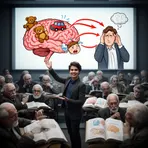
Freudianism emphasizes the role of the unconscious mind in shaping our thoughts and behaviors.
-
Many therapists incorporate elements of Freudianism into their practices to better understand their clients.
Synonyms
 14
8.1
14
8.1
A type of therapy where a trained person helps you find and understand hidden thoughts and feelings
 1
9.9
1
9.9
The study of how thoughts you notice and hidden feelings shape a person's character and actions

Ideas about the hidden part of the mind and early childhood that shape behaviour
Compounds
How Freudian
- Specialized
1
8.4

- Formal
1
7.9
11
6.0
Surface Forms
Morphology
Etymology
Freudianism comes from the name Freud, the doctor who studied the mind, plus the endings -ian 'relating to' and -ism 'a system or belief'. So, Freudianism means the set of ideas from Freud about the unconscious mind and how it affects behaviour.