
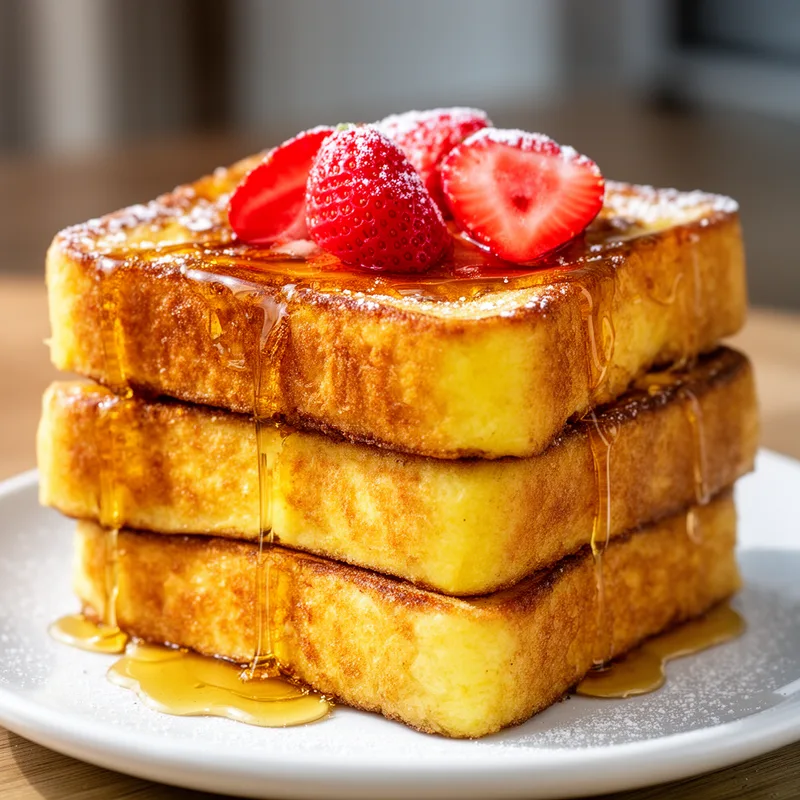
French toast
 43
1.4
43
1.4

- noun
- /frɛntʃ toʊst/
- Fresh platters of French toast were placed before us.
- make French toast
- French toast for breakfast
- eggs and French toast
Loading YouTube…
Watch on YouTubeWe are doing hash Browns, French toast, eggs, beans, bacon and sausage.
- We are doing hash Browns, French toast, eggs, beans, bacon and sausage.
- I also saw a recipe for pumpkin French toast sticks.
Examples
-
You should use stale bread for French toast.
-
We have a classic Spier tradition of French toast on Christmas Eve.
-
And I made French toast, with your favorite--
-
I forgot to make your French toast this morning.
-
And the French toast will be out in just a minute.
-
"If you hurry, I'll make you French toast before I go to work."
Fiction book (1995) -
I'm having French toast and some fruit.
-
For the boys breakfast, Fraser is having French toast with some strawberries.
-
Every single Christmas Day and on my birthday, Jack makes me French toast, Bacon and Maple syrup.
-
I'm having French toast with fresh berries and maple syrup for breakfast.
How Rich

Surface Forms
Morphology
The phrase signals a type of bread-based breakfast (combining 'French' + 'toast' suggests a variety of toast), so learners can infer it refers to a food item made from bread, but the specific preparation (soaking in eggs and milk and frying) is not directly derivable from the constituents. Cross-linguistically the dish often has different names (e.g. French pain perdu), and 'French' here is an attributive label rather than a literal origin cue, making the exact meaning partially but not fully predictable for a B1 learner.
Etymology
French toast comes from an old French recipe called 'pain perdu', which literally means 'lost bread'. Cooks would save hard bread by soaking it in eggs and milk and frying it, so the name fits the fried breakfast we call French toast today.