
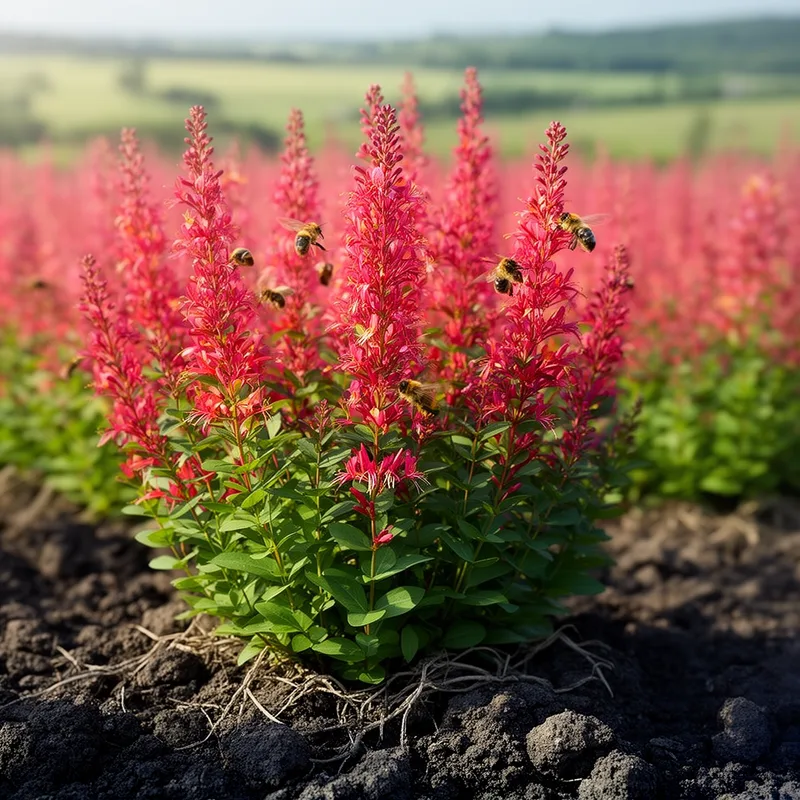
French honeysuckle
- noun
- /frɛntʃ ˈhʌnɪsʌkəl/
- UK
- Farmers often plant French honeysuckle to improve soil and provide forage for bees.
Examples
-
The garden was filled with the sweet scent of French honeysuckle in full bloom.
-
We admired the delicate crimson spikes of French honeysuckle during our walk in the countryside.
-
The French honeysuckle blooms beautifully in spring.
-
Many gardeners love to plant French honeysuckles for their fragrance.
-
Farmers often plant French honeysuckle to improve soil and provide forage for bees.
-
The garden was filled with the sweet scent of French honeysuckle in full bloom.
-
Many gardeners love to plant French honeysuckle for its fragrant flowers.
Synonyms
A flowering plant grown for animal food and pink flowers bees use to make honey
A plant with pink flowers that lives for many years and is grown to feed animals and make honey
Surface Forms
Morphology
This is a straightforward adjective + noun composition: 'French' specifies origin/association and 'honeysuckle' names the plant, so a learner who knows both words will infer it is a type/variety of honeysuckle associated with France or Europe. Botanical details (scientific name, uses) are specialized but do not obstruct the basic compositional meaning; the construction follows common cross-linguistic modifier+noun patterns.
Etymology
French honeysuckle may get its name from the plant's sweet, nectar-filled flowers that look like tiny cups of honey which bees and people could 'suckle'. Because the plant was often grown or sold from France, people added French, so the name now means a fragrant, nectar-rich plant used in gardens and to feed bees and farm animals.

