
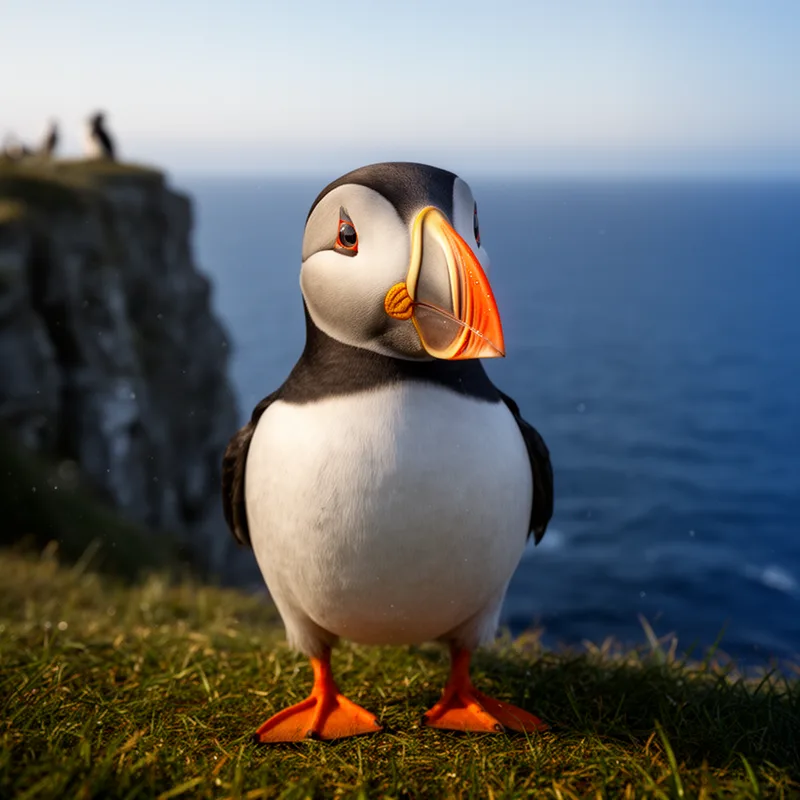
Fratercula arctica
- noun
- Specialized
- The Fratercula arctica can be found nesting on coastal cliffs in Iceland during the summer.
Examples
-
Scientists are tracking populations of Fratercula arctica to monitor changes in the marine ecosystem.
-
Many tourists travel to see the Fratercula arctica during summer.
-
Children at the aquarium were fascinated by the vibrant beaks of Fratercula arctica.
-
The Fratercula arctica is known for its striking beak.
-
Visitors to the coastal cliffs in Iceland often enjoy watching the colorful beaks of Fratercula arctica as they nest during summer.
-
Ornithologists study Fratercula arctica to understand its role in the northern Atlantic Ocean ecosystem.
-
The bright orange and yellow beak of the Fratercula arctica makes it easily recognizable among seabirds.
Synonyms

A seabird with a black back, white belly, and a bright, colorful beak that nests on northern Atlantic cliffs
Surface Forms
Morphology
Fratercula + arctica
This is a compositional Latin binomial: 'Fratercula' names the puffin genus and 'arctica' transparently signals 'of the Arctic' or northern distribution, so together they denote a puffin species from northern/Arctic waters. Because the specific epithet is cognate with English 'Arctic' and the genus label explicitly names puffins, a learner who knows both constituents can readily infer the meaning.
Etymology
Fratercula arctica comes from old Latin words: Fratercula means 'little brother' or 'friar' because the puffin's black-and-white feathers look like a monk's coat, and arctica means 'northern' because the bird lives in cold northern seas. That's why this name is the scientific name for the 'Atlantic puffin', a seabird with a bright, colorful beak found in the northern Atlantic.

