
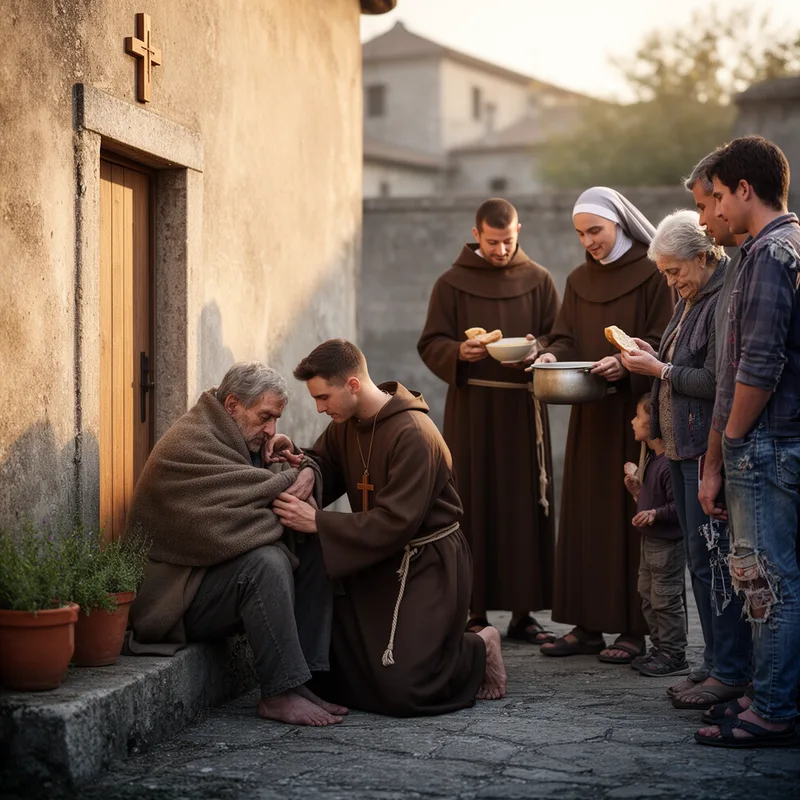
Franciscanism


 1
9.9
- noun
- /frænˈsɪskənɪzəm/
- Many communities around the world embody the spirit of Franciscanism through their commitment to serving the poor and advocating for social justice.
Examples
-
The retreat focused on the practices of Franciscanism, encouraging participants to embrace a lifestyle of simplicity and charity.
-
Like Isabelle of France, Douceline of Digne was a literate and determined woman who followed her own vision of female Franciscanism and institutionalized it in a setting on the edges of the Franciscan Order with the help of a Minister General and Provincial Minister, yet remained technically a laywoman outside the formal control of the Order.
Academic text (2007) -
The teachings of St. Francis reflect the core principles of Franciscanism, which include humility and devotion to God.
Synonyms
 2
9.1
A religious life where people live simply, often in a community and follow strict rules
Surface Forms
Morphology
Franciscanism = Franciscan (transparent) = Francis + can + ism
Standard derivation: the adjective 'Franciscan' (relating to St. Francis) plus the suffix '-ism' names the system of beliefs or practices.
Etymology
Franciscanism comes from Franciscan, the name for followers of St. Francis of Assisi, and the ending -ism, which means 'belief' or 'practice'. St. Francis chose to live simply and help the poor, so Franciscanism means a way of life that values 'humility' and 'poverty'.