

Foraminifera


 1
9.9
- noun
- /ˌfɔːrəˈmɪnɪfərə/
- Specialized
- (c) Oxygen depletion is also reflected in the relative abundance of benthic foraminifera that have adapted to the lack of dissolved oxygen in marine bottom waters.
- benthic Foraminifera
Examples
-
The sediment also holds the remains of sea creatures, such as mollusks and foraminifera, meaning that repeated tsunamis may have been the culprit.
Academic text (2011) -
These so-called benthic foraminifera pick up their 13C/12C ratio from the inorganic carbon dissolved in bottom waters, which itself depends on the oceanic ventilation.
Academic text (2002) -
The fossilized shells of foraminifera provide important clues about historical ocean temperatures.
-
Scientists analyze foraminifera to understand ancient marine environments and the changes they underwent.
-
Samples from the ocean floor containing foraminifera give researchers insights into past climate conditions.
Synonyms
 1
9.9
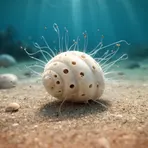
A tiny sea creature with a hard shell that has small holes for thin arms used to move and eat
 1
9.9
Small single-celled sea creature with a hard shell that has holes for thin arm-like extensions

A group of mostly sea single-celled animals with shells that have tiny holes
Compounds
- Specialized
A group of mostly sea single-celled animals with shells that have tiny holes
Surface Forms
Etymology
Foraminifera comes from the Latin parts foramen meaning 'hole' and -fera meaning 'to carry'. So the name is like 'hole-bearers' and helps you picture these tiny sea creatures with shells full of small holes, which is why their fossils help geologists date rocks.