
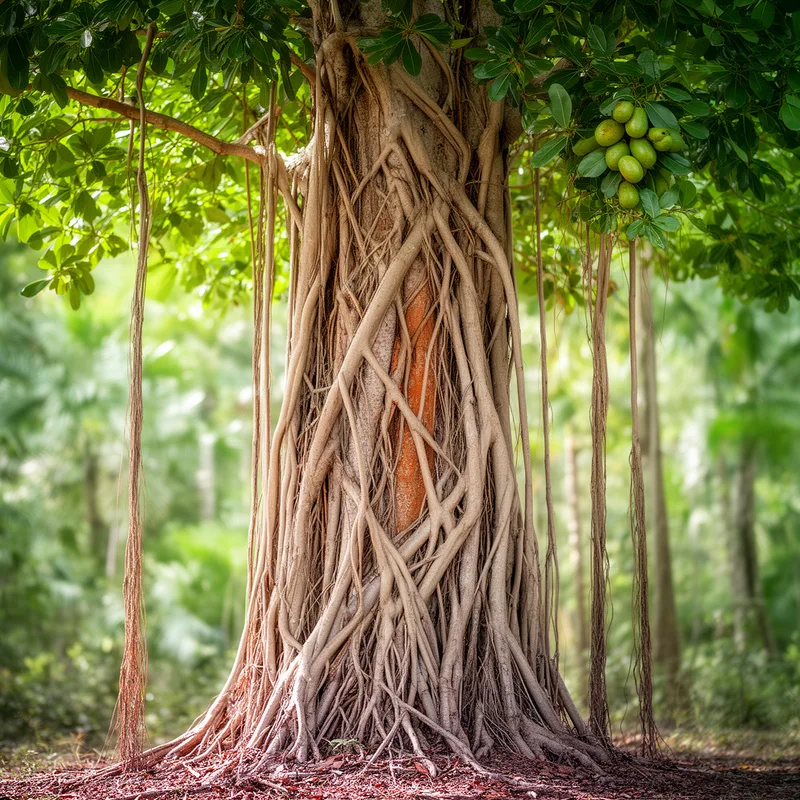
Florida strangler fig
- noun
- /ˈflɔːrɪdə ˈstræŋɡlər fɪɡ/
- Specialized
- The Florida strangler fig can completely envelop a host tree over many years.
Examples
-
Many animals in the Everglades rely on the fruit of the Florida strangler fig for food.
-
The Florida strangler fig is often found in tropical areas.
-
A Florida strangler fig can become a dominant presence in the local ecosystem.
-
Many Florida strangler figs grow along the coast.
-
The Florida strangler fig starts its life by growing on other trees, slowly wrapping its roots around them.
-
In Florida, the fruit of the Florida strangler fig provides nourishment for a variety of birds and insects.
-
The large canopy of the Florida strangler fig creates a unique habitat for many species in southern Florida.
Synonyms

A tree that starts on another tree and grows thick roots over rocks and buildings

A large fig tree that grows on other trees and sends down thick roots
Surface Forms
Morphology
The phrase is fully compositional: 'Florida' names the region, 'strangler' denotes something that strangles or envelops, and 'fig' denotes the tree, so a B1 learner who knows those words can infer it is a fig tree from Florida that grows by enveloping other trees. While a learner might lack botanical detail, the overall referent and behaviour of the plant are directly derivable from the constituents and mirror transparent compound-naming patterns in many languages.
Etymology
Florida strangler fig often starts life sitting on another tree and sends many roots down that wrap around and squeeze the host. That's why the name uses strangler — the roots seem to 'strangle' the old tree as the fig grows and can take over the place.

