
Finno-Ugrian


 1
9.9
- noun
- /ˈfɪnoʊˈuːɡriən/
- Specialized
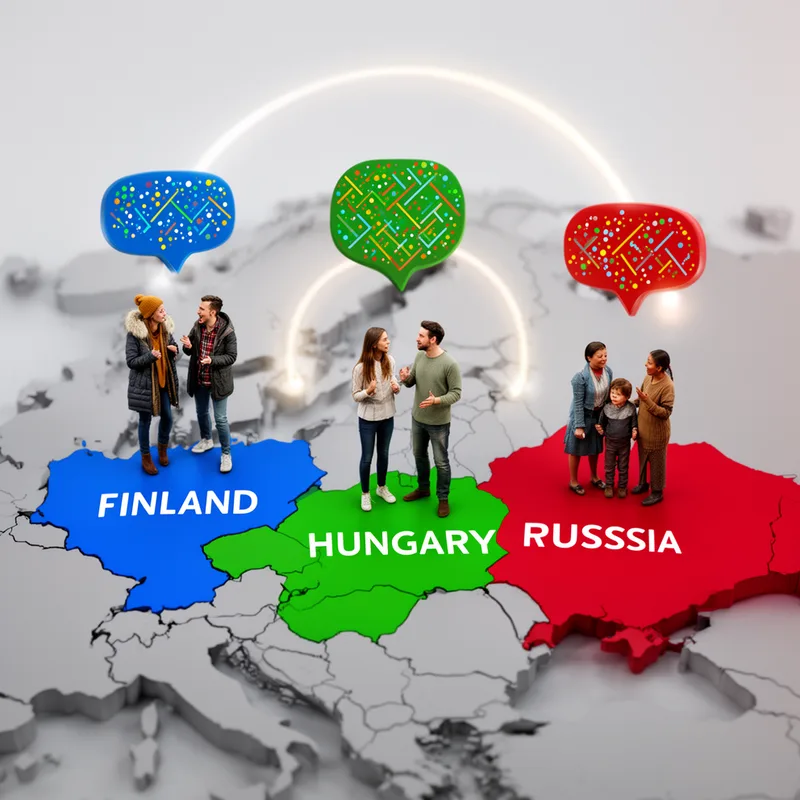
- The Finno-Ugrian language family includes Finnish, Hungarian, and several languages from northern Russia.
- Finno-Ugrian mythology
- Finno-Ugrian traditions
Examples
-
We know with certainty that Magyars were related to the Finns and that their language belongs to the Finno-Ugrian language family.
Blog text (24) -
Those Finno-Ugrians who lived in the vicinity of Russians or under Russian authority were gradually Christianized and adopted the Russian Orthodox faith.
Academic text (2000) -
These characteristics were reflected in the mythology of the Finno-Ugrian peoples:
Academic text (2000) -
According to Finno-Ugrian and Samoyedic mythology, the celestial bear married a human girl.
Academic text (2000) -
It is generally agreed that the tradition of laments is older among Finno-Ugrians than among Slavs.
Academic text (2000) -
Although they may have an independent origin in either cultural complex, the Slavic laments have been decisively influenced by the Finno-Ugrian tradition.
Academic text (2000) -
For many centuries, female shamans served their communities, and this Finno-Ugrian tradition was long-lasting even in Scandinavian society, which had adopted social and religious standards of Western European origin.
Academic text (2000) -
In the Finno-Ugrians' religious beliefs during the pre-Christian age, the repertoire of female figures in the laments was not limited to the shaman and the mother.
Academic text (2000) -
The belief that female spirits were mistresses of nature and the belief in the Earth Mother continued and coexisted in medieval contacts between Finno-Ugrians and Slavs in Russia.
Academic text (2000) -
It is typical of the beliefs of Finno-Ugrians that the earth, as well as different elements and natural phenomena of the middle world (water, fire, wind, forest, etc.), are incarnated by female deities, 'motherspirits.'
Academic text (2000)
Synonyms
 1
9.9
A group of related languages that includes Finnish, Estonian, and Hungarian
Surface Forms
Morphology
Finno-Ugrian = Finn + Ugric (transparent) = Finno + Ugrian
Formed by combining two ethnolinguistic stems referring to Finns and the Ugric group; the compound directly names the language-branch grouping.
Etymology
Finno-Ugrian comes from the names of two places: Finno- for 'Finland' and Ugrian for 'Hungary'. A helpful way to remember it is to think of a language family that links 'Finland' to 'Hungary', so Finno-Ugrian refers to the group of languages related to Finnish, Hungarian, and other nearby languages.