
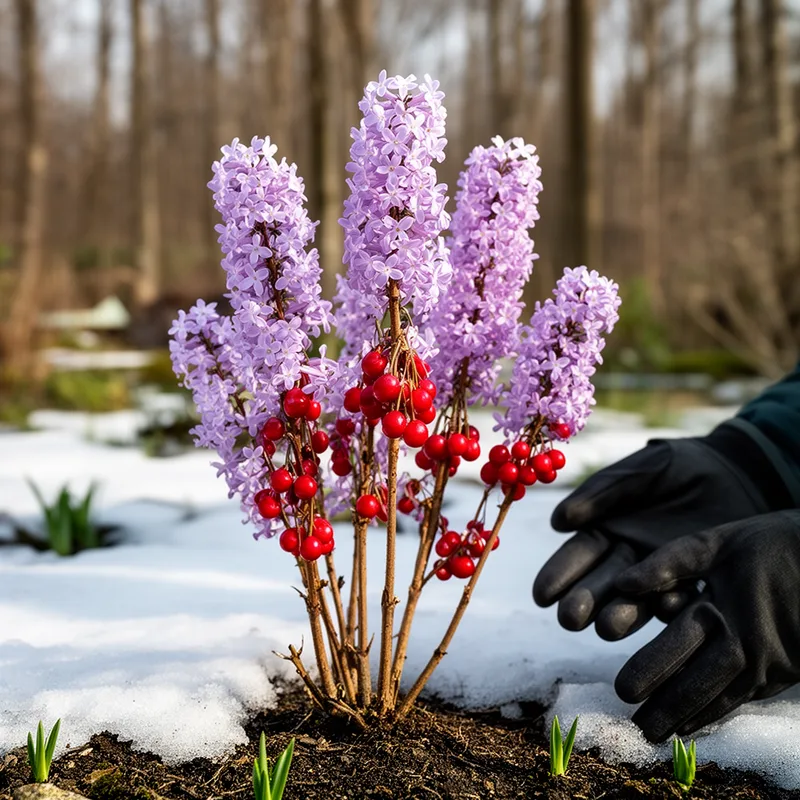
February daphne
- noun
- UK
- The February daphne is prized for its beautiful blossoms and early spring fragrance.
Examples
-
Many gardeners avoid planting February daphne due to the toxicity of its berries and twigs.
-
I saw a February daphne blooming in the woodland border before any other shrub this year.
-
The February daphne is known for its sweet fragrance.
-
I saw a February daphne blooming in the garden.
-
Many gardeners avoid planting February daphne because its berries can be poisonous if ingested.
-
The February daphne produces fragrant lilac flowers that attract early spring pollinators.
-
I saw a February daphne with its striking red berries standing out against the winter landscape.
Synonyms



 1
9.9
1
9.9
A small European bush with sweet-smelling pink-purple flowers and red poisonous berries and twigs

A small European bush that loses its leaves, with purple flowers and poisonous red berries and twigs
How Poisonous

Surface Forms
Morphology
This is a straightforward noun phrase combining a month with a plant name: 'February' specifies the time/association and 'Daphne' names the shrub, so the meaning (a daphne associated with February, e.g. flowering then) is directly derivable from the parts. The compositional pattern (month + plant) is cross-linguistically common, so a B1 learner who knows both constituents would understand it.
Etymology
February daphne is named because it often has very scented flowers in February, and the word daphne comes from an old Greek story about a woman linked to sweet-smelling plants. So the name helps you remember a small, very fragrant shrub that 'blooms early' and has poisonous red berries.