

Excellency
 75
8.9
75
8.9

- noun
- /ˈɛksələnsɪ/
- Formal
- Thank you, Your Excellency.
- His Excellency the Governor
- His Excellency the Minister
- order of His Excellency
Loading YouTube…
Watch on YouTubeI said, your Excellency, these are yours.
- I said, your Excellency, these are yours.
- We're very lucky tonight to have His Excellency Lars Logo Rasmussen joining us.
- He has worn His Excellency with humility and grace while kindling in others.
Examples
-
To show my respect for His Excellency, I prepared this meal myself.
Fiction book (2001) -
It's a great pleasure to meet you, Your Excellency.
-
I said, your Excellency, these are yours.
-
- Yes, Excellency, I do.
-
"Your wife may leave, Your Excellency," said one of the men.
Fiction book (1999) -
What should I do with this, Your Excellency?
-
We now welcome His Excellency Xi Jinping, President of the People's Republic of China.
-
Excuse me, Your Excellency.
-
Ladies and gentlemen, please give a warm welcome to His Excellency, the Prime Minister of Japan Mishahuru Soto and Mrs. Soto.
-
It's a great pleasure to meet you, Your Excellency.
Synonyms
 430
3.9
430
3.9
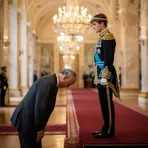
A title used to address a king or queen
 274
8.2
274
8.2
A title used with Your, His, or Her to address a royal person such as a prince
 58
9.0
58
9.0
A polite title used to address certain British judges, bishops, or peers
 2
7.9
2
7.9
A title or form of address that shows respect
How Respectful
- Formal
75
8.9

- Formal
430
3.9
- Formal
2
7.9
- Formal
- UK
∞
1.0
178
1.0
Surface Forms
Morphology
Etymology
The word Excellency comes from the Latin excellere, which means 'to rise' and is the same root as the English verb excel. So calling someone 'Your Excellency' is like saying they are 'high' in rank or above others, a polite way to show respect.