
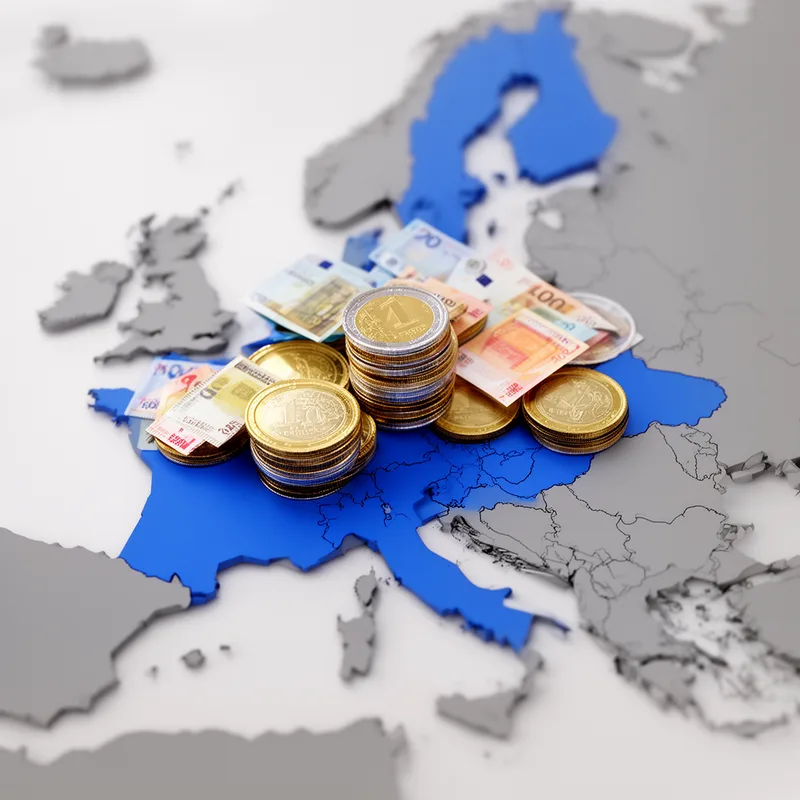
Eurozone
 35
3.9

- proper noun
- /ˈjʊəroʊzoʊn/
- The situation in the Eurozone started with the sovereign debt crisis.
- Eurozone countries
- leave the Eurozone
- Eurozone crisis
Loading YouTube…
Watch on YouTubeFirst, the problems in the Eurozone are driving fundamental change in Europe.
- First, the problems in the Eurozone are driving fundamental change in Europe.
- That was the mistake made by some eurozone countries we have now been battling for years.
- Last year, Germany's economy was the weakest of its large eurozone peers.
- The situation in the Eurozone started with the sovereign debt crisis.
- Because the European Union and the Eurozone are not the same thing and those of us who are in the EU but outside the eurozone need that accepted.
- Now, we have consistently seen the European, the Eurozone essentially grow a lot slower than the United States.
- And either our debt issues or the eurozone issues could spill out in ways that are certainly hard to predict hopefully won't.
Examples
-
The economies within the eurozone have given up their national currencies.
Academic text (2011) -
Yet there is no mechanism by which the EU, or even the Eurozone, can act as one.
Academic text (2008) -
Looking ahead, the eurozone is likely to continue with almost all its current members.
Academic text (2012) -
First, the problems in the Eurozone are driving fundamental change in Europe.
-
But they gave up that option when they joined the eurozone.
Academic text (2012) -
The latter problem has been evident in the Eurozone financial crisis.
Academic text (2014) -
The alternative is for Greece to leave the eurozone and return to its own currency.
Academic text (2012) -
The Europeans, despite their success in creating the Eurozone, were unable to unite at the international level.
Academic text (2008) -
The austerity stemming from the ongoing debt crisis in the Eurozone has only made matters worse.
Academic text (2012) -
Economic growth in the 19 nations that make up the Eurozone slowed in the second quarter.
Surface Forms
Morphology
Etymology
Eurozone is made from euro (the shared money named for Europe) and zone (an 'area'), so it literally means the 'area' where countries use the 'euro'.