

Eupatorium perfoliatum
- noun
- /juˈpɑːtəriəm pərˌfoʊliˈeɪtəm/
- Specialized
- Clusters of white flowers make Eupatorium perfoliatum a distinctive sight in wetlands.
Examples
-
Many herbalists recommend Eupatorium perfoliatum for its medicinal properties.
-
The dried leaves of Eupatorium perfoliatum were brewed into teas by Native Americans.
-
Traditional healers sometimes used Eupatorium perfoliatum to treat flu-like symptoms.
-
The Eupatorium perfoliatum plant thrives in wetland areas.
-
The herb Eupatorium perfoliatum, commonly known as boneset, is used in herbal remedies for its fever-reducing properties.
-
Traditionally, people brewed Eupatorium perfoliatum as a tea to help alleviate cold symptoms.
-
The herb Eupatorium perfoliatum has clusters of small white flowers and was often used in folk medicine.
Synonyms


 1
9.9
1
9.9
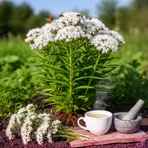
A North American plant that grows every year with clusters of white flowers used in traditional medicine
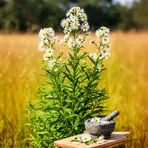
A wild plant of the southeastern United States with white, daisy-like flowers once used in folk medicine
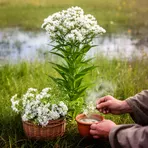
A perennial herb with white flowers used in traditional medicine
Surface Forms
Morphology
Eupatorium + perfoliatum
This is a Latin binomial (taxonomic) name rather than an ordinary English phrase; even if a learner knows 'Eupatorium' as a plant genus, the species epithet 'perfoliatum' is not a common English word (and is not found here), so the specific meaning ('boneset' or that particular herb) cannot be derived. Botanical Latin functions as a label across languages rather than a compositional English expression, so its meaning is unpredictable for a B1 learner.
Etymology
Eupatorium perfoliatum got its name from the plant's look and its old use as a medicine. The second word, perfoliatum, means the stem seems to pass 'through' the wide leaves, a clear picture to help you recognise the plant. People also called it 'boneset' because they used it for fevers that made the bones feel sore, which explains its role as a healing herb today.