
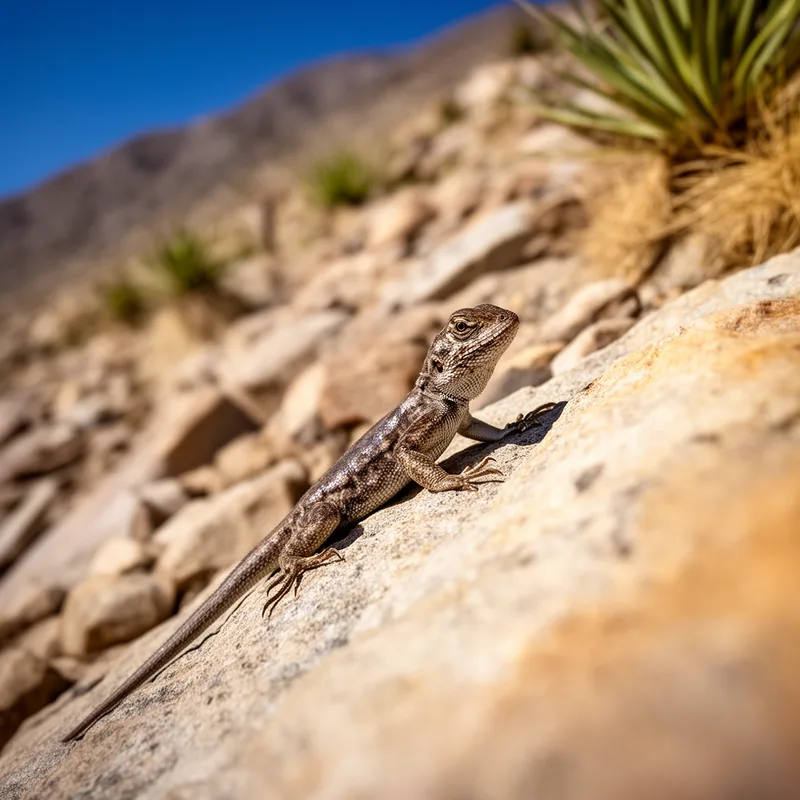
Eumeces callicephalus
- noun
- Specialized
- Researchers observed several Eumeces callicephalus basking on sunlit stones in New Mexico.
Examples
-
The Eumeces callicephalus is well adapted to life in rocky mountain environments.
-
Habitat loss poses a threat to the survival of Eumeces callicephalus in some regions.
-
The Eumeces callicephalus is known for its distinctive coloration.
-
Have you ever seen a Eumeces callicephalus in the wild?
-
Researchers observed several Eumeces callicephalus basking on sunlit stones in New Mexico.
-
Habitat loss poses a threat to the survival of Eumeces callicephalus in some regions.
-
The Eumeces callicephalus is well adapted to life in rocky mountain environments.
Synonyms

A small lizard that lives on rocky mountain slopes in the southwestern United States and Mexico
Surface Forms
Morphology
Eumeces + callicephalus
This is a Latin binomial (scientific) name: knowing the genus label 'Eumeces' (a lizard genus) and the unattested element 'callicephalus' does not allow a B1 learner to infer the meaning 'a species of skink' because the second element is not a familiar English word and the taxonomic naming convention is specialized. The second constituent lacks a dictionary entry and is derived from classical roots (calli-/cephalus) that B1 learners typically do not know, so the overall meaning is not compositionally predictable.
Etymology
Eumeces callicephalus may come from old Greek words that describe the lizard's head: Eumeces suggests 'good' or 'well' and callicephalus means 'beautiful head'. So the name gives a simple image: a skink with a noticeable head, which helps you remember this mountain lizard.

