
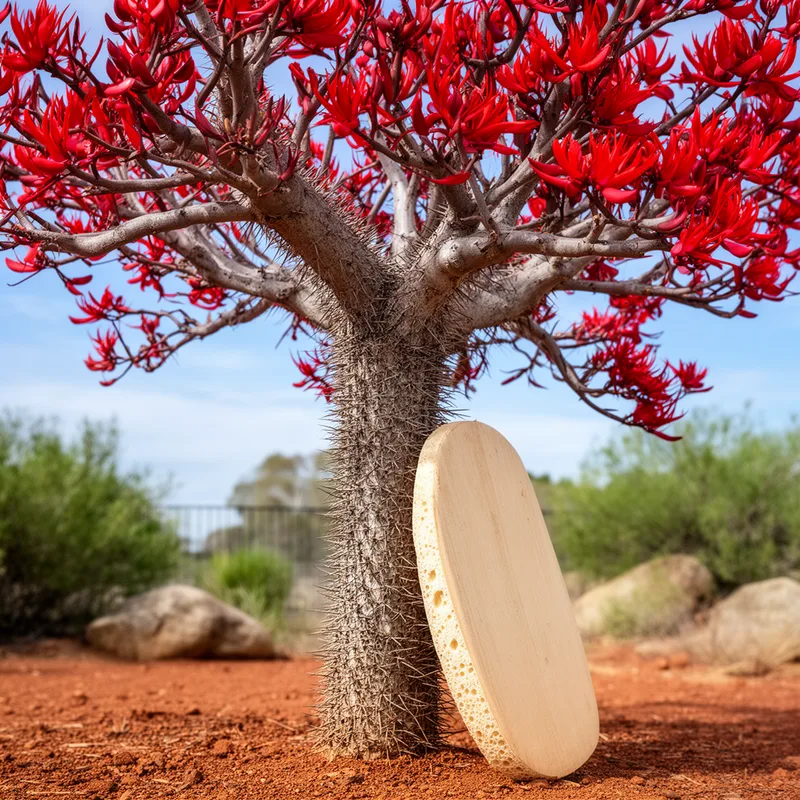
Erythrina vespertilio
- noun
- Australian
- Indigenous Australians have used the wood of the Erythrina vespertilio for making tools and shields.
Examples
-
During spring, the Erythrina vespertilio produces striking red flowers that attract local wildlife.
-
The Erythrina vespertilio is often grown as an ornamental tree in Australian gardens.
-
The Erythrina vespertilio is known for its unique coral-like structure.
-
Have you seen the Erythrina vespertilio in bloom?
-
In Australia, the Erythrina vespertilio is celebrated for its vibrant red flowers that bloom in spring.
-
The soft, spongy wood of the Erythrina vespertilio has traditionally been used by Indigenous Australians for crafting various tools.
-
Many gardeners choose the Erythrina vespertilio for its striking appearance and ability to attract pollinators.
Synonyms
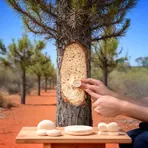
A prickly Australian tree with soft spongy wood used in some crafts

A small tree or bush with three-part leaves and bright red flowers grown for decoration
Surface Forms
Morphology
Erythrina + vespertilio
This is a Latin binomial scientific name functioning as a proper noun rather than a compositional English phrase; an average B1 learner knowing the constituent items would not derive the species description from them. 'Vespertilio' is not a common English word (and even if known as Latin for 'bat', that does not predict a prickly Australian coral tree), so the name is essentially a lexical label and opaque to learners.
Etymology
Erythrina vespertilio comes from two old words: Erythrina from Greek meaning 'red' for its bright red flowers, and vespertilio from Latin meaning 'bat' because the leaves look like a bat's wing. So the name points to a red coral tree with bat-shaped leaves.

