

Erysimum cheiranthoides
- noun
- Specialized
- The bright yellow flowers of Erysimum cheiranthoides are often seen in wild areas, where it thrives as a common weed.
Examples
-
Gardeners often regard Erysimum cheiranthoides as a persistent and unwelcome weed.
-
Some traditional herbalists once used Erysimum cheiranthoides as a remedy for intestinal parasites.
-
Erysimum cheiranthoides can quickly invade cultivated fields due to its prolific seed production.
-
The Erysimum cheiranthoides is often found in disturbed areas.
-
Many gardeners consider Erysimum cheiranthoides a troublesome weed.
-
Many gardeners regard Erysimum cheiranthoides as an invasive weed that disrupts their flower beds.
-
Historically, Erysimum cheiranthoides was used by herbalists to treat intestinal worms.
Synonyms
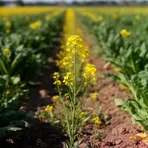
A small wild plant with yellow flowers that often grows as a weed
Surface Forms
Morphology
Erysimum + cheiranthoides
This is a scientific Latin binomial: the string functions as a taxonomic label rather than a compositional English phrase. Even if a learner knows that Erysimum is a genus of flowering plants, the species epithet 'cheiranthoides' is not an English lexical item and provides no predictable, directly derivable meaning to a B1 learner, so the overall sense is not recoverable from the parts.
Etymology
Erysimum cheiranthoides may come from old Greek names for small yellow wallflowers, and the part cheiranthoides means 'like Cheiranthus', a type of wallflower. One popular story says herbalists once used this little mustard plant to get rid of stomach worms, so although gardeners now call it a weed, the name still remembers that old use.

