

Erigeron pulchellus
- noun
- Specialized
- Gardeners often plant Erigeron pulchellus for its delicate violet blooms in spring and early summer.
Examples
-
The woods were dotted with clusters of Erigeron pulchellus along the hiking trail.
-
Researchers are studying Erigeron pulchellus to understand its role in supporting local pollinators.
-
The Erigeron pulchellus blooms beautifully in spring.
-
Have you seen the Erigeron pulchellus in the garden?
-
Gardeners often plant Erigeron pulchellus for its delicate violet blooms in spring and early summer.
-
The woods were dotted with clusters of Erigeron pulchellus along the hiking trail.
-
Researchers are studying Erigeron pulchellus to understand its role in supporting local pollinators.
Synonyms
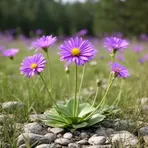
A common wild flower with purple petals that blooms every year
Surface Forms
Morphology
Erigeron + pulchellus
This is a taxonomic binomial: the genus 'Erigeron' signals it is a plant, and the species epithet 'pulchellus' (Latin for 'pretty') would suggest a 'pretty' variety if the learner knew it, so some basic meaning (a type of Erigeron, likely attractive) is recoverable from the parts. However, the detailed botanical sense in the definition (a common perennial with violet‑purple ray flowers) is specific factual knowledge not derivable from the constituents, and B1 learners typically lack Latin or specialist botanical vocabulary. Therefore the relation is only partial.
Etymology
Erigeron pulchellus may come from old Greek and Latin words. The parts eri- and -geron mean 'early' and 'old man' because the plant blooms early and its small pale center can look like a tiny beard, and pulchellus means 'little pretty', so the name helps you remember it is a small, pretty, early-flowering daisy-like plant with violet petals.

