
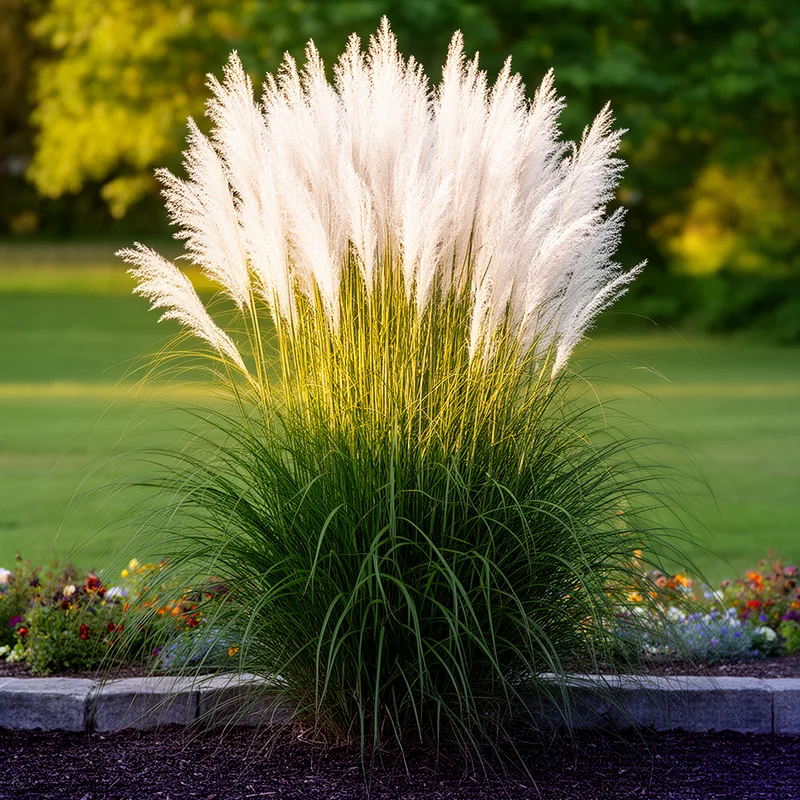
Erianthus ravennae
- noun
- Specialized
- The striking plumes of Erianthus ravennae make it a popular choice for ornamental borders.
Examples
-
Unlike pampas grass, Erianthus ravennae is less invasive and easier to manage in temperate gardens.
-
In late summer, Erianthus ravennae produces large plumes that sway gracefully, adding movement and texture to the garden design.
-
Gardeners often plant Erianthus ravennae to add height and movement to the landscape.
-
The Erianthus ravennae swayed gracefully in the wind.
-
Have you seen the Erianthus ravennae at the botanical garden?
-
Gardeners often plant Erianthus ravennae to enhance the beauty of their gardens with its tall, elegant appearance.
-
The long, white-ribbed leaves of Erianthus ravennae create a stunning visual contrast against other plants in ornamental landscapes.
Synonyms
A tall garden grass with large soft white plumes
A tall grass with long leaves and large feathery plumes like pampas grass

Tall grass with large feathery tops often grown in gardens
Surface Forms
Morphology
Erianthus + ravennae
The first constituent 'Erianthus' names a genus of tall grasses, so a learner who knows that can infer this phrase refers to a particular species of that grass. However 'ravennae' is a Latin specific epithet (not a meaningful English word) and the detailed ornamental characteristics are not derivable from the parts; understanding the full sense requires knowledge of botanical naming conventions. Therefore the expression is partly predictable but not fully transparent to a B1 learner.
Etymology
Erianthus ravennae may come from a Greek word and a place name: Erianthus means 'wool flower', a picture of the plant's soft, feathery plumes, and ravennae means 'from Ravenna', so the name helps you remember this tall ornamental grass with white, woolly plumes.

