
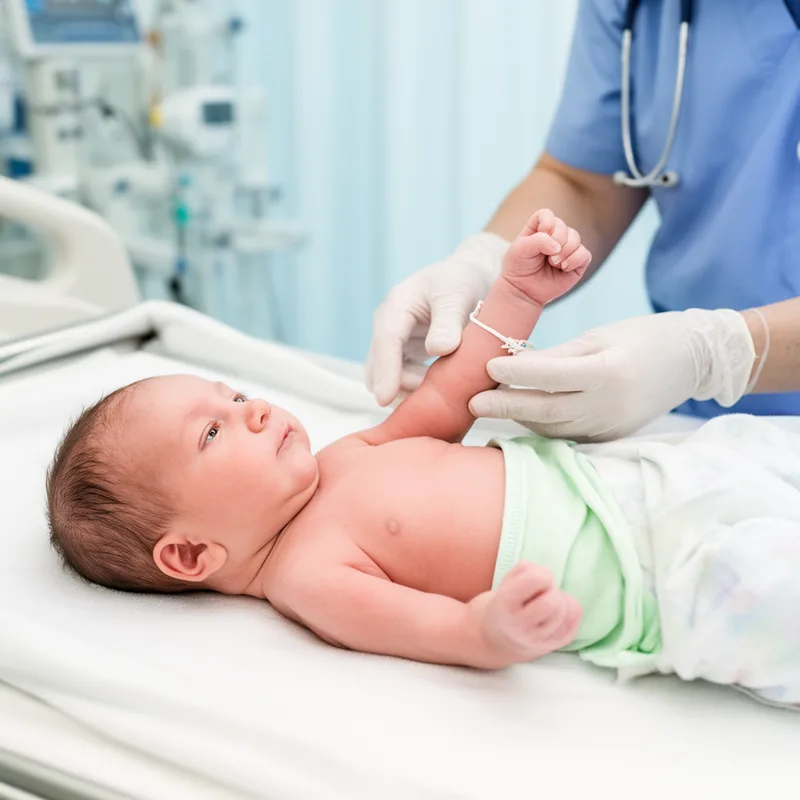
Erb's palsy
- noun
- /ˈɜrbz ˈpɔlzi/
- Specialized
- The newborn was diagnosed with Erb's palsy after complications during delivery.
Examples
-
Physical therapy is often recommended for infants showing signs of Erb's palsy.
-
Many children with Erb's palsy can regain arm function.
-
Doctors explained that Erb's palsy affects movement and sensation in the affected arm.
-
The baby was diagnosed with Erb's palsy after birth.
-
The newborn was diagnosed with Erb's palsy after complications during delivery.
-
Doctors explained that Erb's palsy affects movement and sensation in the affected arm.
-
Physical therapy is often recommended for infants showing signs of Erb's palsy.
Synonyms

Loss of movement in one arm from nerve damage in the shoulder that often happens at birth
Surface Forms
Morphology
Erb's + palsy
The constituent 'palsy' clearly signals paralysis, so a learner who knows that word can infer this is a type of paralysis; however, 'Erb's' is a proper name and gives no information about the affected limb or cause. Because the specific sense (an upper-arm brachial plexus injury, often at childbirth) is not derivable from the parts, the expression is only partially predictable and requires prior exposure for full understanding.
Etymology
Erb's palsy is named after a doctor, Wilhelm Erb, who first described the arm paralysis that can happen during difficult births. His name became the label for the condition, so today Erb's palsy means 'arm weakness or paralysis caused at birth'.

