
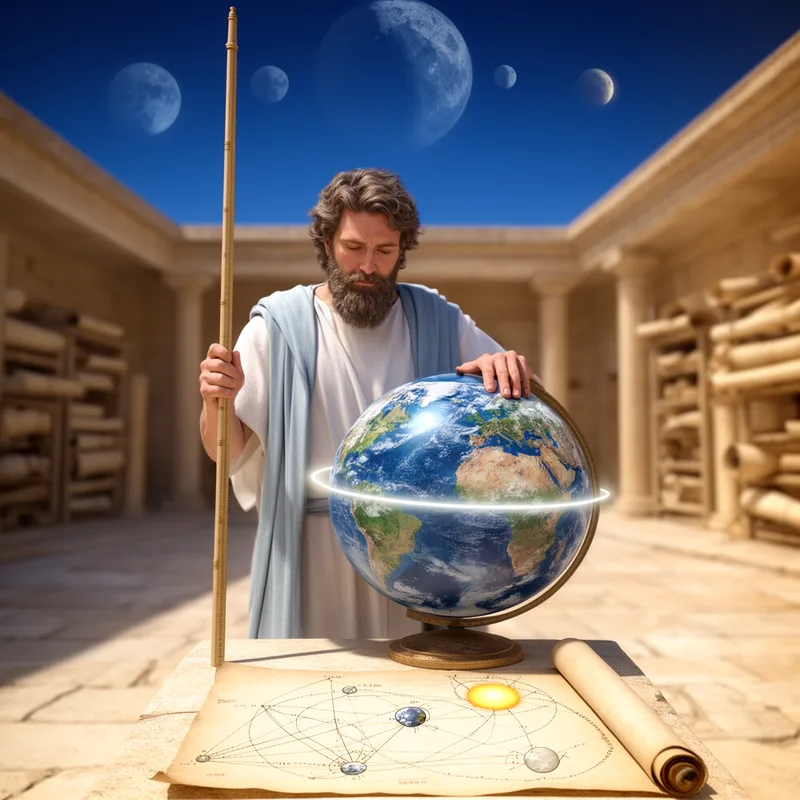
Eratosthenes
 1
9.9

- proper noun
- /ˌɛrəˈtɒsθəniːz/
- The first scientific measurement of a cosmic distance was made around the year 240 A.J.C. by Eratosthenes of Cyrene, director of the Library of Alexandria, by then the best scientific institution.
Examples
-
Eratosthenes lived 2,200 years ago and made some of the earliest and best astronomical observations known.
Academic text (2007) -
This particular group includes: Eratosthenes, who measured the circumference of the Earth with a stick, the sun, and a deep well.
Academic text (2011) -
Eratosthenes figured out it was round and calculated its size (with amazing precision) over two thousand years before the scientific method was developed.
Blog text (17) -
The tradition of describing stars by their positions within a constellation figure had already been established by Eratosthenes and Hipparchus.
Academic text (1990) -
Eratosthenes was a Greek scientist and writer who worked in Alexandria at the mouth of the Nile and is best known for his astronomical measurement of the size of the Earth.
Academic text (1990) -
After Aratus, the next landmark in our study of Greek constellation lore is by Eratosthenes (c. 276-c. 194 BC), to whom an essay called the Catasterisms is attributed.
Academic text (1990) -
Eratosthenes calculated the Earth's circumference using the angles of shadows at noon.
-
The achievements of Eratosthenes in geography laid the foundation for modern mapping techniques.
-
In Alexandria, Eratosthenes used simple measurements to estimate the distance to the Sun.
Surface Forms
Etymology
Eratosthenes comes from Greek parts erato- meaning 'love' and -sthenes meaning 'strength'. A helpful way to remember him is as a man with a 'strong love' of knowledge, which fits the ancient scientist who measured the Earth's size.