
Eragrostis abyssinica
- noun
- Specialized
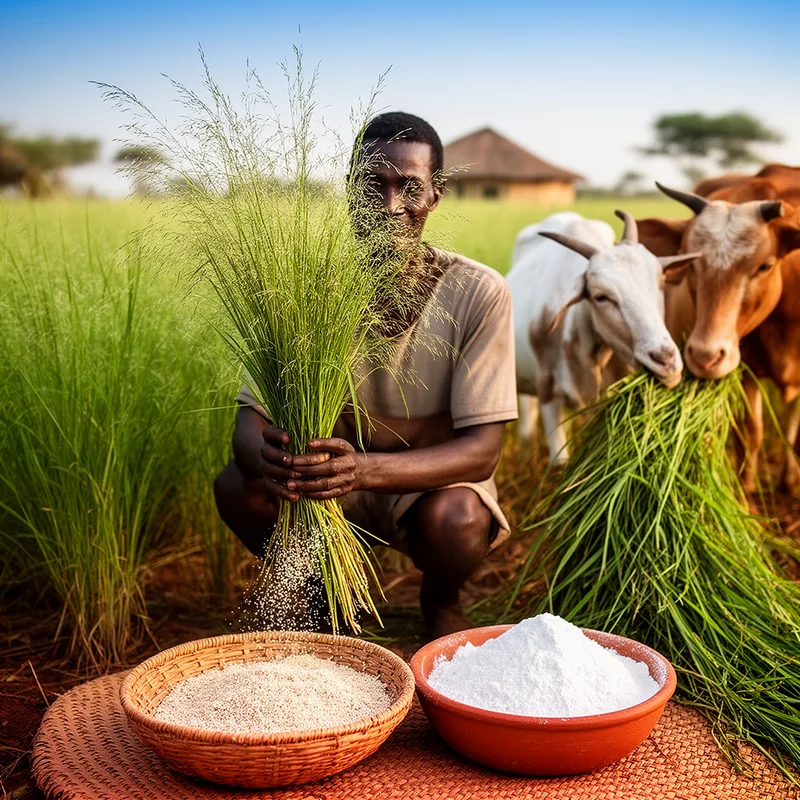
- The white flour produced from Eragrostis abyssinica is valued for making traditional bread.
Examples
-
Farmers often grow Eragrostis abyssinica both for its grain and as a source of animal forage.
-
Farmers in Africa often grow Eragrostis abyssinica for its nutritious seeds.
-
Eragrostis abyssinica is an important staple crop in several African regions.
-
The flour made from Eragrostis abyssinica is known for its quality.
-
Eragrostis abyssinica is cultivated in East Africa for its nutritious edible seeds.
-
Farmers often use Eragrostis abyssinica as animal forage due to its high protein content.
-
The flour made from Eragrostis abyssinica is commonly used in local dishes across Africa.
Surface Forms
Morphology
Eragrostis + abyssinica
This is a binomial Latin name: the genus 'Eragrostis' transparently signals a grass, and the species epithet 'abyssinica' likely encodes a geographic origin (Abyssinia/Ethiopia), so a learner could infer it is a particular kind of grass. However, the specific information that it is cultivated for edible seeds and produces white flour is not derivable from the constituents and many learners will not know Latin species endings, so the overall meaning is only partially predictable.
Etymology
Eragrostis abyssinica comes from two parts: Eragrostis, a name often linked to the Greek idea of 'lovegrass', and abyssinica, which means 'from Abyssinia', the old name for Ethiopia. So the name helps you remember that this grass comes from Africa and is grown for its edible grain and as food for animals.

