
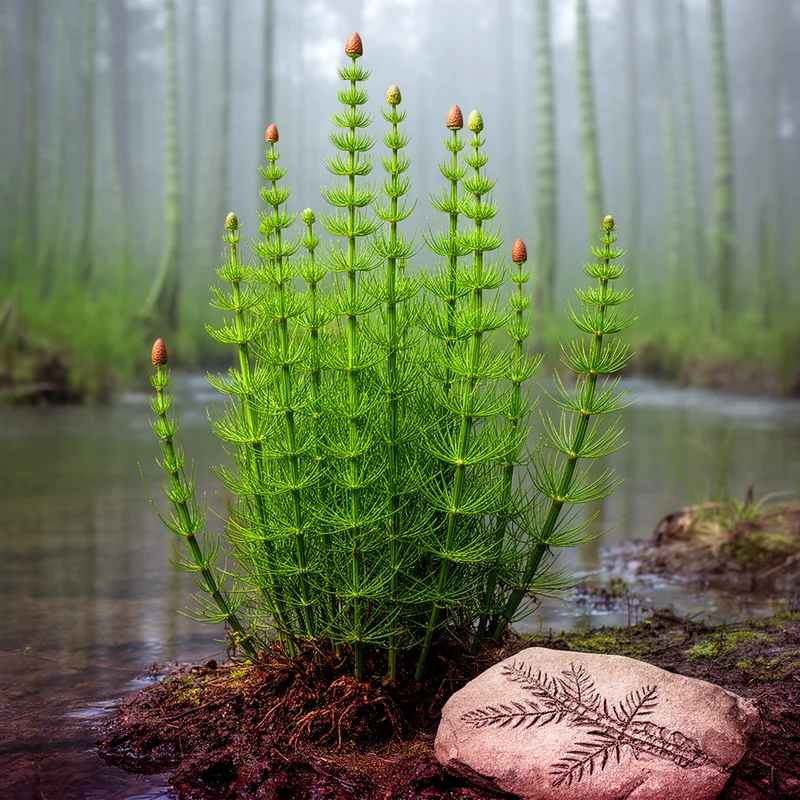
Equisetatae
- noun
- Specialized
- The Equisetatae family includes various species of horsetails.
Examples
-
Paleobotanists study fossilized Equisetatae to learn about prehistoric plant life.
-
The Equisetatae thrived during the Carboniferous period, dominating the landscape.
-
Modern Equisetatae are often found in wet habitats near streams and marshes.
-
Did you know that Equisetatae are ancient plants?
-
Modern Equisetatae are often found in wet habitats near streams and marshes.
-
Paleobotanists study fossilized Equisetatae to learn about prehistoric plant life.
-
The Equisetatae thrived during the Carboniferous period, dominating the landscape.
Synonyms

A group of plants with jointed stems that includes horsetails and extinct relatives
A former group of plants that included horsetails and extinct relatives
Compounds
- Archaic
A former group of plants that included horsetails and extinct relatives
Surface Forms
Etymology
Equisetatae comes from Latin parts equi- 'horse' and seta 'bristle', so it literally means 'horse bristles'. A helpful image is the English name 'horsetail'—these plants look like a horse's tail, so Equisetatae is the group name for those non-flowering plants.

