
Epsilon Aurigae


 1
9.9
- proper noun
- Specialized
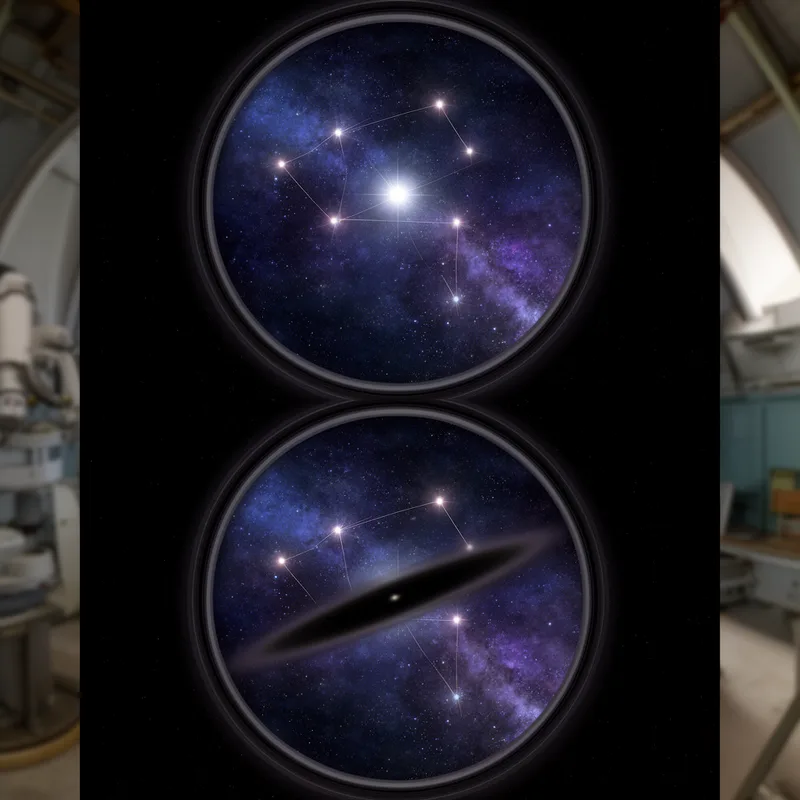
- Epsilon Aurigae is famous among astronomers for the mysterious dimming in its light curve every 27 years.
Examples
-
Some researchers believe that the companion star to Epsilon Aurigae is obscured by a huge disk of dust.
-
Epsilon Aurigae is known for its unusual eclipsing binary system, which leads to periodic changes in brightness.
-
Epsilon Aurigae is easily located with a telescope within the constellation Auriga.
-
Look at how bright Epsilon Aurigae shines tonight!
-
Wow, Epsilon Aurigae looks stunning tonight!
-
Epsilon Aurigae is a notable variable star located in the constellation Auriga, easily spotted through a telescope.
-
Astronomers often study Epsilon Aurigae to understand the dynamics of its unique star system.
Surface Forms
Morphology
Epsilon + Aurigae
This is a proper name for a specific star, not a compositional phrase: knowing the parts 'Epsilon' and 'Aurigae' (which are specialized/foreign-form elements) does not allow a B1 learner to infer the detailed meaning 'a bright, variable eclipsing binary star'. The Greek-letter + Latinized constellation naming convention is specialised astronomical knowledge unlikely to be known or productive for an average B1 learner, so the expression is not transparently derivable from its parts.
Etymology
Epsilon Aurigae comes from a simple way people name stars. Epsilon is the Greek letter for the 'fifth' star and Aurigae means 'in Auriga', the charioteer group of stars, so the name points to that bright star in the Auriga part of the sky.