
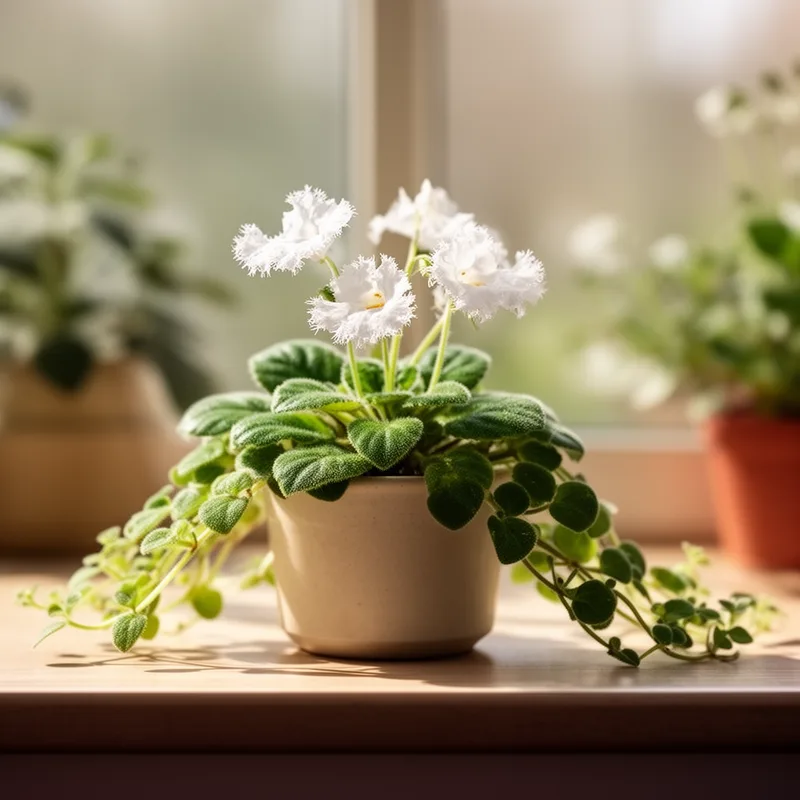
Episcia dianthiflora
- noun
- Specialized
- She purchased an Episcia dianthiflora at the nursery because of its beautiful, fringed white blooms.
Examples
-
Unlike many houseplants, Episcia dianthiflora prefers a warm, humid environment to thrive.
-
The Episcia dianthiflora makes an attractive addition to indoor gardens due to its unique flowers.
-
The Episcia dianthiflora is known for its beautiful white flowers.
-
Have you seen the Episcia dianthiflora in bloom?
-
Many gardeners love the Episcia dianthiflora for its stunning white, fringed flowers that brighten up any space.
-
The Episcia dianthiflora thrives in warm, humid conditions, making it ideal for indoor gardens.
-
You can easily propagate the Episcia dianthiflora by taking cuttings from the main plant.
Synonyms
A low plant that grows along the ground with frilly white flowers often kept as a houseplant

A low plant from Central America that grows along the ground and has frilly white flowers
Surface Forms
Morphology
Episcia + dianthiflora
This is a taxonomic binomial: knowing 'Episcia' (a tropical herb) lets a learner infer this is a species of that plant, but the second element 'dianthiflora' is a Latinized, non-dictionary term and does not transparently convey the specific descriptive meaning to a B1 learner. Binomial names are globally used (so learners can guess it names a species), but the precise floral description is not predictable without botanical or Latin knowledge.
Etymology
Episcia dianthiflora is a plant name built from older words: Episcia may come from a word meaning 'in the shade', and dianthiflora means 'flower like a Dianthus'. So the name gives a clear picture of a low, shade-loving plant with showy, fringed white flowers, which is why this name fits the species.

