
Epirus


 1
9.9
- proper noun
- /ˈɛpɪrəs/
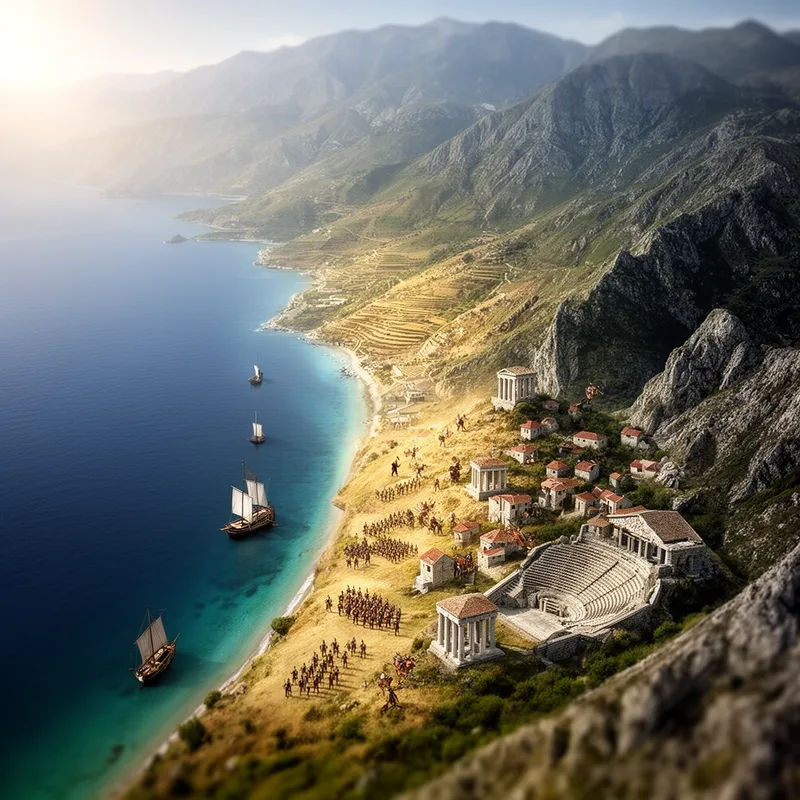
- The ancient region of Epirus was known for its rich culture and strategic significance in Greek history.
- Epirus, Greece
Examples
-
Murad's successor, Mohammed II, continued the effort to retake Epirus.
Academic text (1991) -
The lands of Epirus and Albania were in a particularly turbulent situation.
Blog text (32) -
She also lost a part of Northern Epirus, claimed by Greece as the home of Philip of Macedonia.
Academic text (1995) -
Epirus was a distant outpost of Christendom on the border of the Turkish Empire.
Academic text (1991) -
In the early thirteenth century, Michael II, the Despot of Epirus, also built a castle on the top of the acropolis, very little of which survives.
Academic text (2006) -
In 550, the Goths raided the coast of Epirus and Corfu, sacking Butrint.
Academic text (2006) -
Choosing his occasion carefully, he led his forces over to the Christian side in the battle of Nissa in 1443 and seized the opportunity to detach a part of Epirus (Albania) from the Turkish Empire.
Academic text (1991) -
Greece is inclined to be hostile because of border disputes in Epirus and Greece's interest in an alliance with Serbia to counterbalance Bulgaria and independent, multiethnic Macedonia.
Academic text (1999) -
The kingdom of Epirus played a crucial role in military conflicts during the 3rd century BC.
-
Many archaeological sites in Epirus reflect the region's importance during the Hellenistic period.
Surface Forms
Etymology
Epirus comes from the ancient Greek Ἤπειρος, which means 'mainland' or 'land opposite the sea'. So the name fits the place: Epirus is the mainland area along the Ionian Sea, not one of the islands.