

Epilobium hirsutum
- noun
- Specialized
- The banks of the river were lined with Epilobium hirsutum, their vibrant flowers standing out against the green.
Examples
-
Gardeners sometimes remove Epilobium hirsutum as it can spread quickly in damp soil.
-
The bright Epilobium hirsutum blooms in the summer.
-
Botanists observed that Epilobium hirsutum thrives in wetlands across much of Europe.
-
Many gardeners love Epilobium hirsutum for its vibrant flowers.
-
Botanists observed that Epilobium hirsutum thrives in wetlands across much of Europe.
-
The banks of the river were lined with Epilobium hirsutum, their vibrant flowers standing out against the green.
-
Gardeners sometimes remove Epilobium hirsutum as it can spread quickly in damp soil.
Synonyms

A plant from Europe and Asia with purple red flowers and hairy stems that often grows near rivers
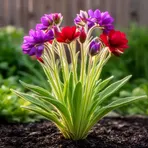
A garden plant with purplish-red flowers and hairy stems and leaves
Surface Forms
Morphology
Epilobium + hirsutum
This is a Latin binomial scientific name (genus + species) whose meaning — a specific plant species — is a lexical label rather than a composition of ordinary English words. Although the species epithet 'hirsutum' is etymologically related to 'hirsute' (hairy), that Latin knowledge is specialized; an average B1 learner who merely 'knows the constituents' in an English sense would not be able to derive the species meaning, so the form is effectively idiomatic/opaque.
Etymology
Epilobium hirsutum is a scientific name that gives a simple picture of the plant: the second word hirsutum means 'hairy', because the stems and leaves are covered in small hairs, and its long leaves and tall stems with purple flowers made people call it 'great willowherb'. That's why the name helps you remember a wetland plant with purple flowers, 'hairy' stems, and willow-like leaves.

