
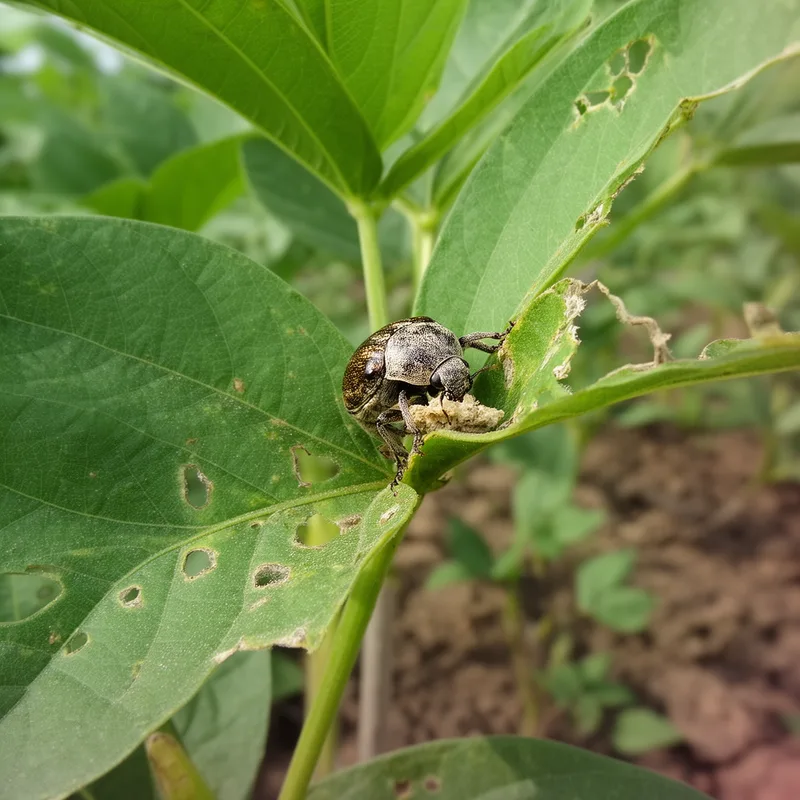
Epilachna varivestis
- noun
- /ˌɛpɪˈlæk.nə ˌvær.ɪˈvɛs.tɪs/
- Specialized
- The Epilachna varivestis, commonly known as the Mexican bean beetle, is harmful to bean crops.
Examples
-
The Epilachna varivestis is a notorious pest among North American bean farmers.
-
Scientists have studied Epilachna varivestis to develop better pest control methods for crops.
-
Infestation by Epilachna varivestis can dramatically reduce the yield of bean plants.
-
The Epilachna varivestis is a common pest in many gardens.
-
Farmers are concerned about Epilachna varivestis damage to their crops.
-
Infestation by Epilachna varivestis can dramatically reduce the yield of bean plants.
-
Farmers have worked hard to manage the population of Epilachna varivestis in their fields.
Synonyms

A small insect that eats the leaves of bean plants and often damages bean crops
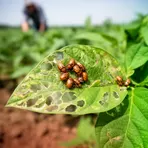
A small beetle that eats bean leaves and damages crops
Surface Forms
Morphology
Epilachna + varivestis
This is a Latin binomial: knowing 'Epilachna' (a genus of ladybugs) allows a learner to infer it names a kind of beetle, so part of the meaning is recoverable. However the specific epithet 'varivestis' is not an English lexical item and gives no clear information about diet or origin, so the full, specific meaning (Mexican bean beetle that feeds on beans) is not predictable.
Etymology
Epilachna varivestis is a scientific name that tells you about the beetle: Epilachna is a kind of ladybird-like beetle that eats plants and varivestis means 'varied coat', a note about the different spots on its shell. So the name makes a picture of a small, spotted 'bean beetle' that eats bean leaves and helps you remember that it is a pest of bean plants.

