
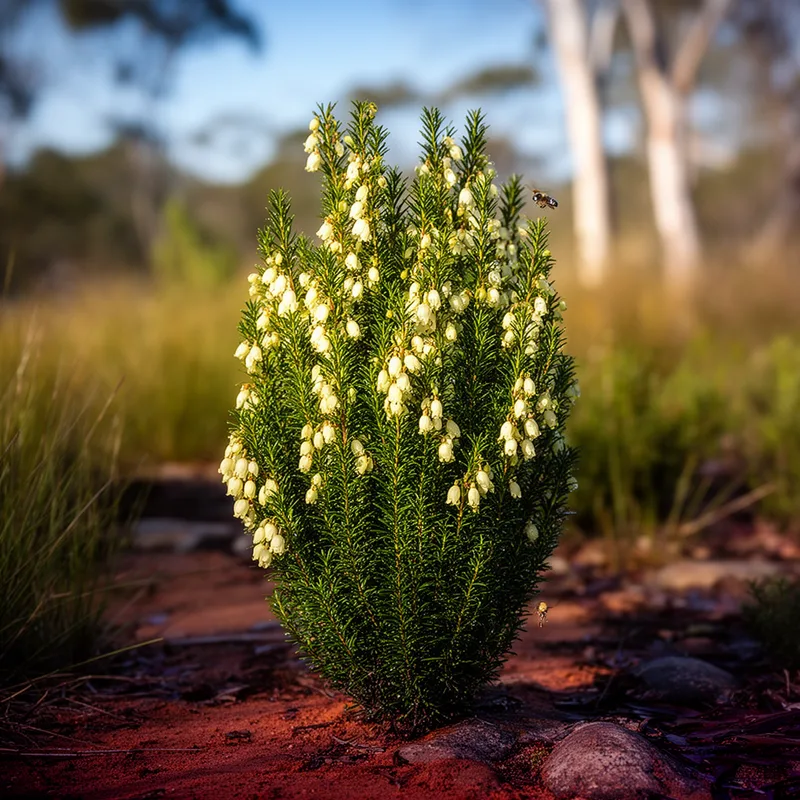
Epacris obtusifolia
- noun
- Specialized
- Gardeners prize Epacris obtusifolia for its delicate ivory flowers and evergreen foliage.
Examples
-
The Epacris obtusifolia blooms in late winter, adding fragrance to the Australian bushland.
-
Botanists studied the Epacris obtusifolia due to its resilience in wet heathlands.
-
The Epacris obtusifolia blooms beautifully in spring.
-
Have you seen an Epacris obtusifolia in the garden?
-
Many visitors admire the Epacris obtusifolia for its fragrant, ivory-colored flowers during their trip to Australia.
-
In gardens across Australia, Epacris obtusifolia thrives, showcasing its beautiful blooms all year round.
-
The Epacris obtusifolia plant is often used in landscaping thanks to its attractive appearance and pleasant scent.
Synonyms

A small upright shrub from Australia and Tasmania with fragrant white flowers

A small upright bush from Australia and Tasmania with sweet-smelling, colorful flowers
Surface Forms
Morphology
Epacris + obtusifolia
This is a scientific binomial: the genus name Epacris (a type of Australian shrub) plus a Latin specific epithet obtusifolia, which literally means 'blunt‑leaved'. If a learner knew both constituents they could infer 'an Epacris with blunt leaves' (so there is some compositionality), but the epithet is not a common English word and does not convey the fuller descriptive information (flowers, fragrance), making the relation only partially predictable for typical B1 learners.
Etymology
Epacris obtusifolia comes from old Greek and Latin words that describe the plant. The part Epacris means 'on the summit' (referring to where some plants grow) and obtusifolia means 'blunt leaves', so the name points to a small shrub with rounded leaf tips and helps you remember its look.

